Candidates Weigh In: The Hybrid Work Models They Really Want
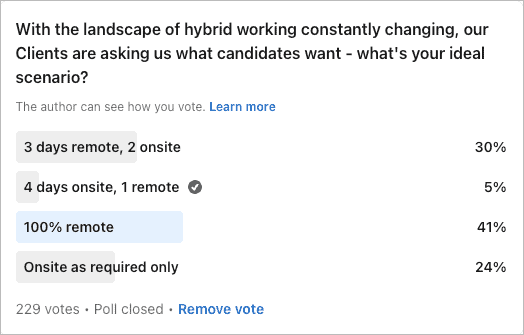
In today’s rapidly evolving world of work, hybrid models are not only commonplace but are actively shaping the future of many industries. The conversation around flexible work options is no longer limited to the startup scene or tech giants; it’s becoming the norm for businesses of all sizes across all sectors. To get a pulse on what candidates are really seeking in terms of work arrangements, we recently ran a poll, and the results are both revealing and intriguing.
Results of the poll unpacked
- 3 days remote, 2 onsite: 30%A significant portion of candidates prefer a near-equal split between remote and onsite work. This model appears to strike a balance between the need for focused, independent work from home and the undeniable benefits of in-person collaboration. It provides an opportunity to maintain a strong connection with the team and the organizational culture while still enjoying the flexibility of remote work.
- 4 days onsite, 1 remote: 5% Interestingly, only a small percentage of respondents are looking for a predominantly onsite work week with just a touch of remote flexibility. This could signal that the appetite for extended periods in a traditional office setting has decreased, or perhaps those who prefer a primary onsite role aren’t as attracted to hybrid models in the first place.
- 100% remote: 41%The largest group of respondents have expressed a desire to work completely remotely. The allure of zero commutes, the comfort of one’s own home, and potentially the ability to live anywhere are driving factors for this preference. Organizations aiming to attract top talent need to seriously consider how they can accommodate, support, and engage with employees who may never set foot in the office.
- Onsite as required only: 24%A quarter of respondents want to come onsite only when absolutely necessary. This model is more fluid than the others, suggesting that candidates are seeking even more flexibility based on the nature of their tasks and projects. For instance, they might come onsite for vital team meetings, client presentations, or specific collaborative efforts but otherwise work remotely.
Navigating the New Normal
The results clearly indicate that a one-size-fits-all approach to hybrid working will not suffice. Businesses need to remain adaptable and be willing to experiment with different models to find the best fit for their teams. They must also invest in tools, training, and technology that support remote work to ensure productivity, collaboration, and security.
Final Thoughts
Hybrid working is more than just a trend — it’s a profound shift in how we think about work, life, and the delicate balance between the two. By listening to what candidates want and staying flexible, businesses can not only attract top talent but foster a happier, more productive, and loyal workforce.
 Article by Louise O Neill | Director Business & Technology | Berkley Recruitment