Hiring the right candidate can be a time-consuming and arduous process. However, with the right strategies and techniques, you can speed up your hiring process and find the best candidate for the job. In this article, we’ll explore five proven strategies to streamline your hiring process and reduce the time to hire.
Identify the Key Skills and Qualifications
Before you start the hiring process, it’s essential to clearly understand the key skills and qualifications required for the job. By doing so, you’ll be able to identify the most suitable candidates for the role, thereby reducing the time to hire.
To determine the essential skills and qualifications, you can start by conducting a job analysis. This involves identifying the position’s key responsibilities, tasks and required skills. You can also review previous job descriptions or consult with the hiring manager to better understand the role.
Streamline Your Recruitment Process
One of the biggest factors that contribute to a long hiring process is a complicated recruitment process. A lengthy recruitment process can lead to delays, confusion, and frustration for both candidates and hiring managers.
To streamline your recruitment process, you can start by simplifying the job application process. You can also use applicant tracking software (ATS) to automate certain aspects of the recruitment process, such as resume screening and interview scheduling. You might find helpful our FREE Ebook. “Designing Your Candidate Experience – A Practical Guide for Employers” download here >>>
Leverage Your Employer Brand
Your employer brand is an essential aspect of your recruitment process. It is the perception that candidates have of your company as an employer. A strong employer brand can help you attract top talent and reduce the time to hire.
To leverage your employer brand, you can start by creating a compelling careers page on your website. You can also leverage social media to showcase your company culture and values. Additionally, you can encourage your employees to share their positive experiences working for your company on review sites such as Glassdoor.
Conduct Structured Interviews
Interviews are an essential aspect of the recruitment process. However, unstructured interviews can lead to bias and inconsistencies in the hiring process, leading to delays and a longer time to hire.
To avoid this, you can conduct structured interviews, where you ask every candidate the same set of questions. This will ensure that you are evaluating all candidates based on the same criteria and can help you make more objective hiring decisions.
Use Data and Analytics
Data and analytics can provide valuable insights into your recruitment process. By analyzing data such as time-to-hire and candidate sources, you can identify bottlenecks and areas for improvement, leading to a more efficient hiring process.
To use data and analytics, you can start by tracking key metrics such as time-to-hire, candidate quality, and source of hire. You can also use recruitment analytics software to analyze your data and identify trends and patterns.
Conclusion
By implementing these five strategies, you can streamline your hiring process, reduce the time to hire, and find the best candidate for the job. Remember, hiring the right candidate is essential for the success of your company, and a more efficient hiring process can help you achieve this goal. If you need guidance on how to reduce your time-to-hire by streamlining your hiring process, then why not book a free consultation with Berkley’s team of experienced recruitment consultants?
https://www.berkley-group.com/wp-content/uploads/2023/04/Hiring.webp16162000Robert Hawkeshttps://www.berkley-group.com/wp-content/uploads/2026/05/Berkley-Group-Logo-2026.svgRobert Hawkes2023-04-28 11:07:582023-04-28 11:28:085 Proven Strategies to Streamline Your Hiring Process
Want to win the War for Talent in 2022? Attractive compensation packages are key to attracting new employees. Read on to learn more about how to develop a strong compensation strategy that will help your company stand out in the candidate’s market of today.
The term “Compensation Package” refers to all of the monetary and non-monetary compensation that employers give to employees in exchange for performing their work. A Compensation Package brings together salary, benefits, cash and non-cash incentives, as well as perks and freebies.
You Might Also Like: What is Pay Transparency & Why Is It Important?
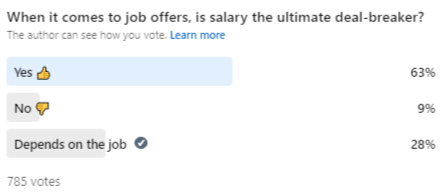
According to a recent poll carried out by Berkley, 63% of respondents agreed that salary is the ultimate deal-breaker when it comes to job offers. This goes to show the critical importance of compensation in a company’s recruitment strategy. This is especially the case in today’s strong candidate market, where in-demand professionals can essentially name their price. Building an attractive compensation package that is in line with the current market will empower your organisation to win the war for talent against other employers.
Today’s professionals are significantly more mobile than previous generations and they often vote with their feet if they are dissatisfied with an employer. Research tells us that employee compensation is a major contributor to satisfaction levels and, this, in turn, can lead to improved productivity, morale and loyalty among staff all of which can help to greatly reduce an organisation’s churn rate. As such, taking the time to design attractive and futureproof compensation packages for employees can help to support staff retention and reduce attrition.
3. They Offer an Opportunity to Put Company Values into Action
“A compensation philosophy is simply a formal statement documenting the company’s position about employee compensation. It explains the “why” behind employee pay and creates a framework for consistency. Employers use their compensation philosophy to attract, retain and motivate employees.” ~ SHRM
A well-thought-out compensation philosophy can support the promotion of certain core values within an organisation. Certain benefits (e.g. childcare, paid volunteer days, upskilling opportunities) that tie in with core values provide an opportunity to show employees that their employer cares about more than just the work. By implementing a compensation philosophy that works in tandem with your core values, you can build a strong Employer Brand Proposition that will ultimately help to attract new employees who share these values, leading to a more cohesive workforce.
Common Components of A Compensation Package
The elements that comprise Compensation Packages can be broken down and separated into two distinct categories: direct and indirect compensation.
Direct Compensation
Direct compensation describes a straightforward monetary reward given to employees. It can be broken down into two types – fixed rewards (e.g. base salary) and short-term and long-term incentives (e.g. commission, bonuses).
Examples of Direct Compensation
Base salary
Wages
Bonuses
Commission
Overtime
Stock options
Indirect Compensation
Indirect compensation encompasses any perks and benefits that an employer offers to their employees. It consists of two categories – indirect financial compensation and non-financial compensation. One of the main purposes of indirect compensation is to highlight how much the organisation values its staff.
Examples of Indirect Compensation
Health insurance
Paid leave (vacations, holidays, sick days, etc.)
Retirement contributions
Educational Assistance
Paid volunteer days
Pensions
Company cars
Gym memberships
Low cost or free meals
Bike to Work Schemes
You Might Also Like: What is Salary Benchmarking? A Guide for Employers in Ireland
How to Ensure You’re Offering a Competitive Compensation Package
“Supposing is good, but finding out is better.” ~ Mark Twain
In order to ensure that your organisation is offering fair and competitive compensation packages to new employees, you will need to regularly research the market. Stay up-to-date with employment trends and make sure your compensation strategy is in line with the latest market developments.
You should also make a habit of conducting salary benchmarking exercises against your competitors. Don’t forget to include benefits and perks in your research. For a step-by-step guide on how to do this, check out our dedicated article, “What is Salary Benchmarking? A Guide for Employers in Ireland.”
If you need support, we highly recommend partnering with a Recruitment Consultancy that has specialist expertise in your area. An experienced consultant can advise you on the market and how to build a compensation package that appeals to today’s candidates.
https://www.berkley-group.com/wp-content/uploads/2022/05/pexels-skitterphoto-332304-scaled-e1652178530952.jpg400495Robert Hawkeshttps://www.berkley-group.com/wp-content/uploads/2026/05/Berkley-Group-Logo-2026.svgRobert Hawkes2022-04-26 12:40:442022-05-16 11:46:22Designing Unbeatable Compensation Packages for New Employees
In today’s fast-paced recruitment market, the phenomenon of “ghosting” is becoming increasingly prevalent. Read on to learn more about how ghosting can hamper your hiring efforts in 2022.
A crossover term from the dating world, “Ghosting” refers to the practice of ceasing“all communication and contact with another person without any apparent warning or justification and subsequently ignoring any attempts to reach out or communication made by said person” (Wikipedia).
In the recruitment world, the phenomenon of ghosting has become a major pain point for candidates and employers alike. Ghosting can happen:
When job applicants drop out of interviewing or onboarding processes without notifying the employer.
When organisations cease all communications with job candidates upon deciding that they are not the right fit for the role in question.
Candidate Ghosting By Employers
Statistics About Candidate Ghosting
75% of applicants never hear back from employers after applying for a job. (Source: Human Capital Institute)
60% of candidates never hear back from employers after attending an interview. (Source: Human Capital Institute)
80% of job seekers say they would not reapply to a company that didn’t notify them of their application status (Source: Lever).
Communicating With Unsuccessful Candidates
The proliferation of online job search tools has greatly increased the number of applications employers typically receive. If a role receives many applications, then it can be difficult to stay on top of communications. As such, many employers tend to forget about unsuccessful job applicants.
One way to avoid this from happening is to employ the services of a recruitment consultancy such as Berkley. The consultants will engage candidates on your behalf and ensure a steady stream of communication and updates. This, in turn, will help to protect your employer brand.
While there is no legal requirement to communicate with unsuccessful candidates, there are many reasons why you could incorporate this practice into your recruitment lifecycle:
It is considerate to provide closure to candidates as it shows a basic respect for the time and effort invested into their application.
It helps to maintain goodwill with candidates, and thereby helps to protect your employer brand and reputation.
You can add Silver and Bronze Medallists to your talent pool and leave the door open for future opportunities. For example, here at Berkley, Silver and Bronze medallists comprise a key part of how we grow our talent pools. This helps to ensure that our consultants and our clients have access to top professionals.
Stop Ghosting Candidates Today By Creating A Positive Rejection Process
Rejecting Candidates Whose CVs Didn’t Make the Cut
It’s best practice to notify candidates even if they are rejected at the earliest stages of the recruitment process. Fortunately, the emergence of ATS technology means that it is easy to automate this process even if you receive a large number of applications.
This time-saving technology means that you can put more energy into creating a thoughtful rejection notice. When it comes to writing rejection letters, your guiding principles should be clarity and brevity. Start the email by thanking the applicant for taking the time to apply. You can then clearly state that you have decided not to proceed with their application. As this is still early days, you do not get into specifics about the reasoning behind your decision.
You Might Also Like: How to Reduce Time-to-Hire: 10 Steps & Strategies
If a candidate has put time and effort into attending a job interview with you, then you do owe them a more comprehensive response. We recommend that the news is broken over a phone or video call as it is a more personal mode of communication.
If you have engaged the services of a Recruitment Consultancy, the Consultant will notify the candidate on your behalf. In many cases, the consultant will have developed a relationship with the candidate and will know how to deliver the news in a way that softens the blow.
You should manage expectations by getting straight to the point. Thank them for taking part in the process and then clearly state that you have decided not to proceed with their application. You should be ready to provide both positive feedback and constructive criticism to the candidate about their application. End the interaction on a positive note by wishing them well in their job search and by offering to keep them in mind for any suitable roles that may arise in the future.
Employer Ghosting By Candidates
Why Do Candidates Ghost Employers?
In a strong candidate market, top professionals are likely talking to multiple employers. According to data from Indeed, 40% of candidates ghost when they receive an offer from another company. If the other offer provides a more lucrative compensation package, then the candidate is likely to take it and never look back. Read our dedicated guide to learn more about how to design an unbeatable compensation package for employees that may help put an end to employer ghosting.
Candidates are more likely to ghost an employer if the hiring process so far has been characterised by poor and slow communication. Our own research shows that 43% of candidates would wait for a maximum of two weeks to hear back from an employer before considering the job a lost cause and moving on.
On a similar note, candidates are more likely to ghost a potential employer if the hiring process is too long and complicated. In a survey, Berkley found that a whopping 81% of respondents have dropped out of a hiring process because it was too long.
You Might Also Like: What is Pay Transparency & Why Is It Important?
While you cannot control the behaviour of candidates, you can design a hiring process that reduces the conditions that can often lead to ghosting.
Remember that other organisations may be courting the same candidates as you, so your first priority should be speed. Assess your current hiring process and identify opportunities for streamlining. For a comprehensive guide on this, check out our post “10 Ways to Reduce Time-to-Hire.”
This applies to the Offer Stage as well. When you have found the right candidate – make sure that you have everything in place to make an offer asap. Anticipate some negotiation and prepare your conditions in advance. If a higher salary is out of the question, then look at other areas where you can sweeten the deal such as benefits and flexible working.
In order to keep candidates engaged throughout the process, , it’s important to ensure consistent, clear and timely communications with a focus on clarity and transparency. Here are some ways you can use communication to keep candidates engaged:
Keep the candidate in the loop by sending frequent updates on their application status. If you’re working with a consultancy, they will do this for you.
During the early stages of the hiring process, use an automated solution to send prompt and timely templated communications.
Phrase your messages in a way that encourages a response.
Manage candidate expectations by providing clarity on timelines.
Clearly outline what the interview process will look like from the outset.
What to Do If A Candidate Ghosts You
If you are ghosted by a candidate, we advise that you make several attempts to follow up. Give them the benefit of the doubt initially, as life happens and things sometimes get in the way. Use the candidate’s preferred contact method but switch it up if that’s not working. Give yourself a hard deadline after which you can cut your losses and move on to the next candidate.
One way to mitigate the effects of candidate ghosting is to work with a trusted Recruitment Partner. They will try to follow up with the candidate for you. In the case that the candidate remains uncontactable, the Consultant will be able to source alternative candidates.
https://www.berkley-group.com/wp-content/uploads/2022/03/despaired-gef7bea704_1920-e1648135050240.jpg400495Robert Hawkeshttps://www.berkley-group.com/wp-content/uploads/2026/05/Berkley-Group-Logo-2026.svgRobert Hawkes2022-03-29 10:02:362022-05-10 11:51:34Ghosting: What is It & How Is It Affecting Your Company’s Candidate Experience?
Is your organisation struggling with high candidate drop-off? The length and complexity of your hiring process could be to blame. Read our guide to discover how to reduce your time-to-hire in 2022.
It is a volatile market and employers today are facing a myriad of unprecedented challenges. In 2022, employers across the board are contending with skills shortages, wage demands, candidate expectations and that’s before even mentioning remote work!
In 2021, a record 2.5 million people were at work in Ireland – up 10% from 2020. A buoyant employment market means that skilled candidates have never had it so good. Candidates today are confident and can take their pick of opportunities.
However, many employers are struggling to attract interest and hire talent for their open jobs. They may have a strong brand and a compelling message but their recruitment process is letting them down. So what can employers do to stand out in today’s fiercely competitive market?
Speed Matters
“A key challenge and a particular point of interest that I always highlight to my clients is the need for a fast and clear interview process. An elongated interview
process and delays between each round will result in the candidate losing interest and potentially accepting an offer elsewhere. It’s very important to create a smooth and efficient process to keep the candidate engaged.”
Aidan CrowleyManager, Berkley Life Sciences
In the fast-paced and competitive candidate market of today, the speed of an organisation’s hiring process can have a significant bearing on the candidate experience. Time-to-hire is the biggest issue impacting hiring, yet the easiest thing for employers to control. If your hiring process (i.e. candidate CV received to offer tendered) takes more than four weeks then you will see little return on your time invested. Your preferred candidates won’t wait.
The employers we partner with that are most successful in hiring are simply getting to candidates faster, have a streamlined interview process, know their value proposition and can communicate it.
Employers need to review and streamline their own internal processes before hitting the jobs market. A streamlined and efficient hiring process demonstrates that you respect the candidate’s time. What’s more, a carefully designed hiring process gives the candidate a positive impression of what it would be like to work in the organisation. Finally, focusing on delivering an efficient time-to-hire will enable you to outpace your competitors and attract top talent.
What Factors Slow Down Time-to-Hire?
Failure to attract the right candidates: There are many reasons why an organisation may not be attracting enough suitable candidates for an advertised vacancy. This could include a badly written job description, advertised salaries that are below the market average, or a poor advertising strategy.
Mismanaged timing and scheduling: The person or team responsible for executing the hiring process may not be able to make the required time commitment to the hiring process.
Inefficient Interviews: Failure to create a comprehensive interview strategy will likely lead to an inefficient interview process full of preventable duplication, confusion and follow-ups.
Lengthy Processes: It may be the case that the steps you require the candidate to take are very time-consuming and are slowing down the process as a whole.
How to Reduce Your Time-to-Hire in 10 Steps
1. Map, Measure & Monitor
Start by mapping out your hiring process as it currently stands. Identify areas where you could streamline the process by eliminating bottlenecks, removing duplicate activities, and cutting out unnecessary steps.
Set goal metrics in time-to-interview and time-to-fill. For each role you advertise, make sure that you clearly communicate these goals to the people responsible for hiring.
With every vacancy, ask the responsible team to actively monitor and measure their performance against pre-defined benchmarks. Over time, you can use these figures to identify what factors are contributing to a slow hiring process.
2. Secure Full Internal Approval First
Don’t advertise the role or engage a recruiter until you have received full internal approval to hire. We have found that internal disagreements are one of the most common causes of disruption and delay when it comes to hiring. Before engaging the support of an outside third party, create a checklist of relevant internal stakeholders and ensure everyone on that list is aware of and satisfied with your hiring plans.
3. Mobilise an Interview Panel in Advance
Additional preparation will be required if you plan on using an interview panel. Like any interview, taking care to plan and prepare will greatly affect your success in securing the right candidate.
To ensure a swift and effective hiring process, it is essential to select and prepare your panel well in advance of scheduling any interviews. You will first need to thoroughly brief each panel member on the role requirements so that there is alignment among the team. You will also need to share any necessary documentation (e.g. role outline, candidate checklist etc) in advance of the interview. Some basic interview training may also be required to ensure a higher quality interview.
4. Schedule Interview Blocks in Advance
With interview panels, scheduling can quickly become complicated so it’s best to get this out of the way well in advance of bringing in any candidates. Arrange a meeting with the panel members to discuss availability. You can then use this information to schedule dedicated interview blocks using a calendar tool. This exercise will also allow you to get a better idea of realistic and achievable hiring timelines.
5. Stick to Three Interview Stages or Less
In the fast-paced employment market of today, employers need to be careful not to turn the interview process into a marathon. Many organisations are experiencing high levels of candidate drop-off as a result of scheduling too many interviews. Interview fatigue is real and candidates will drop out of the process if they are asked to jump through too many hoops.
Our consultants’ recommendation? Set a strict maximum of three interview stages. For junior and mid-level candidates, you should aim for no more than two interviews.
You Might Also Like: Ghosting: What is It & How Is It Affecting Your Company’s Candidate Experience?
Salary is one of the most common reasons why candidates turn down job offers. According to Berkley’s own research, 63% of job-seekers say that a low salary is the ultimate deal-breaker for them.
To reduce your time-to-hire, you will need to set a reasonable salary that is in line with current market averages. In our experience, many organisations struggle to hire for certain roles because candidates won’t entertain below-average salaries. As such, it’s important to do your research. You can benchmark salaries by talking to a specialist recruitment consultant, researching competitors and downloading salary guides from trusted sources.
You Might Also Like: What is Salary Benchmarking? A Guide for Employers in Ireland
“An Employer Value Proposition (EVP) is your company’s core benefits that make up your wider employer brand. Think of it as a promise between an employer and a potential applicant. What can your company and culture offer them, in exchange for their talent, skills, and experience. An EVP is where you can explain and build the case for top talent.” ~ Personio
Knowing how to sell your role is a key part of achieving a faster time-to-fill. Know your audience and craft messaging that will appeal to them. To learn more about candidate preferences, talk to a seasoned recruiter. Once you have solidified your messaging around the benefits and opportunities associated with the role, make sure that you can comfortably communicate it in a consistent way to candidates.
8. Formalise Your Remote/Hybrid Policies
Our consultants have found that many employers are missing out on their desired candidates due to inflexible working options. In the post-covid working world, two-thirds of job-seekers would turn down a job offer if remote/hybrid working wasn’t offered. So, if you have decided that remote/hybrid doesn’t work for your business, then you should be prepared to defend your case to candidates.
If your organisation hasn’t already put a formalised policy in place, then it’s time to write one. CIPD offers the following advice on what to include in your policy:
Setting out who (or which role types) is eligible for hybrid working.
Explaining how to request hybrid working.
Clarifying roles and responsibilities for hybrid workers and people managers.
How hybrid working intersects with other forms of flexible working.
Reviewing other related policies including, for example, expenses, IT usage, homeworking and data protection.
You Might Also Like: Going Hybrid & The Future of Work
Unrealistic employer expectations and the subsequent lengthy search for mythical “Unicorns” and “Purple Squirrels” can greatly prolong your time-to-hire. In today’s fiercely competitive market, employers need to be flexible and realise that no candidate is going to be a 100% match for the role. Unless you are willing to commit to a large compensation package or a months-long search process, then there is little point in waiting around for your ideal candidate to appear.
Instead, employers should base their selection criteria on a brief list of Remember, that in many cases candidates can be trained and upskilled in technical skills. Whereas, soft skills, attitude and cultural fit can be far more tricky to instil.
10. Automate Time-Consuming Tasks
Another way to reduce your time-to-hire is to invest in smart technology that can automate time-consuming processes. AI search tools, digital talent pools, and ATS tools can all help to eliminate laborious and time-consuming activities. If you don’t have access to these resources in-house, then you may want to consider partnering with a recruiter with smart technology capabilities.
Need More Advice on How to Reduce Your Time-to-Hire?
“In the fast-paced, candidate’s market of today, reducing your time-to-hire is one of the most effective strategies for winning the war for talent.”
Katie SullivanManager, Berkley Business & Technology
If you need guidance on how to reduce your time-to-hire by streamlining your hiring process, then why not book a free consultation with Berkley’s team of experienced recruitment consultants?
Pay transparency has become a major talking point among employees and employers alike in 2022. Read our guide to learn what pay transparency is and why it is important.
Pay transparency is a company policy in which employee compensation data is made visible. Pay transparency policies help to ensure that employees have a good understanding of their organisation’s compensation philosophy, strategies and practices.
Companies that adopt a pay transparency policy have multiple options when it comes to sharing compensation data. Most companies choose to only make this information visible to those within the organisation, however some opt to make it publicly available.
The Prevalence of Pay Secrecy
Up until recently, the majority of organisations encouraged employees not to discuss salary with their peers. Unofficial pay secrecy policies emerged from employers’ fear of litigation and a desire for greater flexibility in salary negotiations.
Because most employees are not provided with salary information from employers, their knowledge heavily relies on their ability to communicate with each other. Due to privacy norms, however, pay remains a taboo subject. As such, many people feel uncomfortable revealing their earnings to others and are reluctant to ask colleagues about their salaries.
Secrecy around salary creates what’s known as “information asymmetry” i.e. staff members are not aware of how much they are paid in relation to their co-workers, but employers know about everyone’s pay. There are numerous disadvantages associated with this that can hinder staff attraction, engagement and retention.
Oneresearch paper contends that letting employees’ imaginations run wild “may cause misconceptions about compensation distribution in the company, a decreased sense of internal and external equity (or fairness), decreased motivation, decreased capability of the management to influence the employees’ behaviour at work, decreased employees’ loyalty and trust in the company.”
Pay secrecy has also been found to create the conditions that allow wage inequality to thrive. In an environment where pay secrecy is the norm, employees have no way of discovering if they are being paid less than their peers. What’s more, given that raises are based on previous earnings, discriminated-against employees are less likely to negotiate for higher pay. The institution of a pay transparency policy not only motivates employers to create fair pay systems but also gives employees the opportunity to monitor, complain about and rectify any pay discrepancies.
Breaking the Pay Secrecy Taboo
However, recent years have seen more and more employees call for the end of pay secrecy. So what factors have contributed to the rising demand for pay transparency?
1. Combatting Wage Inequality
Over the past few years, numerous countries have introduced legislative measures to tackle discriminatory wage gaps. In many cases, these measures use salary transparency to force employers to be more accountable for wage discrepancies.
A good example of one such measure is the Gender Pay Gap Information Act which was signed into law by the Irish government in July 2021. Under this Act, private and public sector employers with 250+ employees will need to report on the difference in male and female remuneration. Over time, the scope will be widened to include employers with 150+ employees and then 50+ employees.
2. The Great Resignation
Since 2020, “The Great Resignation” has rocked the world of work with employees leaving their jobs in droves. Against the current backdrop of salary inflation, many professionals who feel that they are being underpaid in their current job are seeking out new, better-paid roles. As such, some organisations are adopting innovative practices such as salary transparency in order to bolster their talent attraction and retention rates.
When employers are not transparent about pay, employees are 50% more likely to leave their job in the next 6 months. 57% of employees who are paid at market believe they are paid below market, and of the employees who are paid above market, 42% believe they are paid below market. ~ Payscale
3. Gen Z Enters the Workforce
Generation Z (i.e. e born between the years 1996 and 2012) is entering the workforce and is expected to make up a quarter of the global workforce within the next few years. As the oldest members of Gen Z start securing entry-level roles, we are now beginning to get an idea of how this generation will shape the workforce of the future. Over the coming years, we expect employers to grapple with differing generational values and attitudes as Gen Z’ers come to dominate the labour landscape.
Gen Z is distinguished by their social conscience and this has played into their professional aspirations. This age group is passionate about equality for all in the workplace and are willing to challenge the status quo in order to achieve it.
For Gen Z, equality and transparency go hand-in-hand. As such, pay transparency is a key issue for this age group. Data from a recent Beqom study backs this up:
Gen Z-ers are more likely than the members of any other generation to share salary information with their colleagues.
70% of Gen Z-ers would consider switching jobs for greater transparency.
28% said pay transparency was important to creating a better company culture, while another quarter said knowing their CEOs’ salaries would motivate them to work harder and earn more money.
4. Online Movements
Social media and online forums have provided a space where countless people from all backgrounds can discuss salary transparency. Given the taboo nature of pay, many people feel more comfortable discussing these issues in an anonymous conversation online with strangers than face-to-face with their real-life colleagues, friends and family.
The 2015 #talkpay campaign offers up one example of how the internet has been harnessed to promote the pay transparency movement. The hashtag was initiated by Lauren Voswinkel, a Pittsburgh-based senior software developer, who realised after many years of working in the industry that she was being paid significantly less than her male counterparts. According to Twitter data, about 1,300people published salaries as a result of this trending hashtag.
Buffer: A Case Study of Pay Transparency in Action
The most well-known example of a company with a salary transparency policy is Buffer – a social media management tool. In 2013, published an online spreadsheet outlining each employee’s first name, salary, position and city of residence. They have also publicly shared their formula for calculating strategies and have been open about benefits.
Buffer’s openness has made them an employer of choice and this has had a positive impact on their talent attraction efforts. For example, in the month following the publication of the salaries, Buffer received 2,886 job applications, more than doubling the 1,263 it received in the 30 days prior to the announcement.
Pay Transparency & The Future of Work
Companies that adopt pay transparency policies are more likely to develop a data-driven employee compensation strategy that prioritises proactivity and fairness. Companies can future-proof their talent acquisition strategies by designing compensation packages for employees that encompass pay transparency best practice. This ensures that all employees know how and why they are valued. In the future, it will be those organisations that invest their time, thought and effort into designing comprehensive pay transparency policies that will be best-positioned to win the war for talent.
You Might Also Like: Berkley’s 2022 Salary Guide Reports
https://www.berkley-group.com/wp-content/uploads/2022/02/markus-winkler-BvlxNyjnIzg-unsplash-scaled-e1643968500260.jpg400495Robert Hawkeshttps://www.berkley-group.com/wp-content/uploads/2026/05/Berkley-Group-Logo-2026.svgRobert Hawkes2022-02-04 10:01:562022-05-10 11:49:01What is Pay Transparency & Why Is It Important?
Salary benchmarking is essential for employers who want to remain competitive in today’s tight labour market. This process allows employers to quickly identify and adapt to labour market developments and out their competitors in the War for Talent.
“Benchmarking is the practice of comparing business processes and performance metrics to industry bests and best practices from other companies.” ~ Wikipedia
Salary benchmarking refers to the process of collecting information on salary and benefits packages offered by similar organisations operating in the same industry. This data can be further broken down by location, industry, company size and so on. This research provides human resources (HR) teams with a useful comparative framework that they can then use to calculate salaries for specific roles.
Salary benchmarking is a detailed comparative remuneration process that enables organisations to evaluate how competitive they are within the labour marketplace. Conducting this exercise regularly ensures that your organisation is keeping up with market developments. As such, salary benchmarking has become standard global best practice for companies of all industries and sizes.
Despite the turmoil of the past two years, Ireland is enjoying a buoyant employment market and is expected to return to full employment by 2024. In particular, there has been a surge in demand for skilled employees across the tech, engineering, life science and supply chain sectors.
However, a combination of skills shortages, high employee turnover, and pandemic-induced disruption has resulted in a fiercely competitive market in which candidates are very much in the driving seat. We are also seeing pent-up demand for salary increases among employees who took pay cuts or remained in lower-paying jobs during the pandemic. What’s more, with inflation rates reaching a 21-year high of 5.5% in December, in-demand candidates who know their worth are now seeking out higher salaries either through pay rise requests or by changing jobs.
The Benefits of Salary Benchmarking
Talent Attraction & Retention
In today’s volatile jobs landscape, it is those employers who arm themselves with up-to-date and accurate salary data who are the most likely to win out in the war for talent. Top professionals will gravitate towards “employers of choice” that they perceive to offer a fair and competitive salary and benefits package. From a retention point of view, employers who have conducted a thorough benchmarking exercise will be prepared when employees request pay rises. As such, salary benchmarking plays a critical role in talent attraction and retention strategies.
Hiring in a New Market/Industry
Salary benchmarking is also an immensely useful activity for organisations that are new to the market or who are hiring in an unfamiliar area. Performing a comprehensive study of the going market rates can help employers to define costs and determine budgets for new roles. This will then enable them to set alluring compensation packages for new positions that are competitive in the market.
Ensuring Fair & Equal Compensation
“According to WorkEqual, the 8th of November marks the date on which women symbolically stop earning, on average relative to men, because of the gender pay gap.”
Another key advantage of salary benchmarking is that it can help tackle wage discrepancies across different groups. Study after study reveals that women and people of colour earn less than their white male counterparts across a wide range of roles and industries. What’s more, professionals who are affected by the pay gap often become trapped in a cycle of lower pay if objective salary information is not made available. Salary benchmarking provides objective information that employers can use to make fair, non-discriminatory salary decisions.
Why You Should Also Benchmark Company Benefits & Perks
In 2022, many companies do not have the budget to keep up with ever-rising salary inflation. In cases like this, it may prove useful to benchmark the benefits and perks offered by your competitors. This information will enable your team to create a compensation package that appeals to more than just the candidate’s financial motivations.
For example, you may find that providing schedule flexibility, remote working, and above-average annual leave in addition to a fair salary may be more attractive to candidates than simply paying a higher salary but none of these benefits.
In today’s highly competitive labour market, benchmarking total compensation packages, including benefits, will ensure that your organisation is offering overall packages which stand out from your competitors.
How Do You Conduct a Salary Benchmarking Exercise?
Step 1: Design a Goal-Oriented Process
Your first step will be to decide what information you need and how you will gather it. To do this, define your goals and then identify what data points will best allow you to achieve those goals. You may find that the type of data you require will vary depending on the group of people you are studying. We find that a good starting point is to ask yourself “Where do the people we hire come from and where do they go when they leave us?”
Once you have defined your required data points, you will then need to create a clear, structured process that you can easily repeat again and again. At this point, you will have a better understanding of the project scope so it’s a good time to figure out whether it’s something that can be done in-house or if you will need support from a third-party expert such as a specialist Recruitment Consultancy.
Step 2: Collect Your Data
Now that you have completed the planning stage, the data collection process may commence. You can gather compensation data in a variety of ways, including survey data, HR-reported aggregate market data, and even employee-reported data. When compiling your data, ensure that it is easy to navigate by grouping together similar jobs. You may further segment your data by including additional information on location, industry, company size, and experience level.
In many cases, you will need to secure approval from key decision-makers for any new compensation strategy. As such, it’s important to remember your audience when collecting and presenting your data. You will need to ensure that your data can stand up to scrutiny by being scrupulous in verifying data, referencing sources and providing supporting evidence.
Step 3: Determine A Compensation Strategy
The salary benchmarking process will provide you with the requisite information to set pay structures that are externally competitive and internally equitable. Having compared the data against your own budgets, you can determine your desired market position and set a target percentile. Be sure to choose a target that both aligns with your own pay philosophy while also giving you sufficient wiggle room for negotiation with candidates.
Useful Salary Benchmarking Tools
If you are planning on conducting a Salary Benchmarking exercise in 2022, then you could kickstart the process by downloading a copy of Berkley’s latest Salary Guide report or our 2022 Contracting Rate Report. Our consultants have collated data on 300+ roles and have devised three reports covering each of our core specialities – Business & Technology, Life Science & Engineering, and Supply Chain & Procurement.
You Might Also Like: Berkley’s 2022 Salary Guide Reports
https://www.berkley-group.com/wp-content/uploads/2022/01/mathieu-stern-1fzyz-bmKBw-unsplash-scaled-e1643626623318.jpg400495Robert Hawkeshttps://www.berkley-group.com/wp-content/uploads/2026/05/Berkley-Group-Logo-2026.svgRobert Hawkes2022-01-31 11:11:032022-05-10 11:53:34What is Salary Benchmarking? A Guide for Employers in Ireland
Need top tech talent fast? Contingent workers could be the perfect solution for your business. Read on to learn more.
Want to Close Out that Project by 2022?
In the weeks and months preceding the year’s end, many clients seek to progress or close-out outstanding projects. To that end, they may wish to bring in one or more skilled specialists on a short-term basis to meet urgent project requirements.
At Berkley, we see this every year and the good news is that we can help. Our dedicated Business & Technology contracting team is made up of seasoned Recruitment Consultants who can find you the right talent fast.
Why Partner With Berkley for Your Urgent Project Requirements?
When it comes to contracting, our consultants are subject matter experts and boast expansive networks of skilled professionals across Ireland and beyond. What’s more, their vertical focus means that they have unrivalled expertise in their niche. This insight combined with Berkley’s state-of-the-art AI-powered Digital Talent Pools means that our consultants can quickly source candidates who are the perfect match for your needs.
In addition to sourcing high-calibre talent, our dedicated team can add further value by helping you to map out and cost your organisation’s project requirements. With their longstanding and diverse experience in Project Resource Management, they can support you in the evaluation and identification of talent gaps for current and future project needs.
Find Out How Much to Pay Your Contractors in 2022 With Berkley’s Rate Report
Need A Continuous Talent Pipeline for Your Projects? Try Our Statement of Work Service
The Statement of Work (SOW) approach centres on outcome-based contracts. With this model, our team delivers services against a pre-defined set of outputs, milestones, and deliverables. Berkley provides an end-to-end Statement of Work model to ensure that you are supported throughout the full SOW lifecycle. To find out more about what we can do for you, visit our dedicated SOW page.
How to Get Started with Hiring Contractors
1. To get started today, you will first need to reach out to the Contracts Division of Berkley’s Business & Technology team. One of our consultants will conduct a comprehensive Requirement Qualification to better understand your business’s unique needs and challenges.
2. Once a timeline has been agreed upon, our consultants will work to source suitable candidates for the open role(s). This stage can be completed quickly and our team will endeavour to have a shortlist of candidates within 24 hours.
3. Our consultants will work with you throughout the interview and offer stages.
4. Once an offer has been accepted, Berkley’s dedicated Contractor Manager will get the new hire set up as a contractor (if they are not one already). They will also ensure all the necessary arrangements for invoicing have been made.
5. At the end of the contract, we can assist should you wish to extend the candidate’s contract or offer them a permanent position.
Interested? Reach out to Us Today
If you would like to learn more about how Berkley’s Business & Technology Contracting services can help you, why not call us at +353 (0)21 4289 600 or email us at info@berkley-group.com.
https://www.berkley-group.com/wp-content/uploads/2020/11/pexels-andrea-piacquadio-3762806-scaled-e1606125764156.jpg400495Robert Hawkeshttps://www.berkley-group.com/wp-content/uploads/2026/05/Berkley-Group-Logo-2026.svgRobert Hawkes2021-11-30 15:21:382022-02-24 09:53:29Contingent Workers – The Ideal Solution for Urgent Project Requirements
The term “Workplace Flexibility” refers to a formal or discretionary agreement between employees and employers concerning when, where and how employees can work. This approach aims to give employees greater control over their work schedules and environment.
Flexibility Stigma describes the “discrimination and negative perception towards workers who work flexibly, and [consequent] negative career outcomes” (Source: The Irish Times). Historically, stigma was a major contributing factor to the low uptake of flexible working. A 2019 survey found that one in three flexible working requests were turned down by employers. Memory.AI writes that flexible working was perceived as “a privilege bestowed on lazy people who don’t want to come into the office.”
What’s more, studies have revealed that Flexibility Stigma is highly gendered and fosters structural sexism in the workplace. One academic study from 2018 found that “men are more likely to say they experienced negative outcomes due to co-workers working flexibly, while again mothers are more likely to say they experienced negative career consequences due to their own flexible working.” While flexible working models were introduced with the intention of levelling the professional playing field, flexibility stigma had the opposite effect. A 2016 report by the UK’s Equality and Human Rights Commission found that 20% of mothers had experienced negative comments about flexible working, and 11% felt forced to leave their job.
“Telecommuting, one of many forms of work-life flexibility, should no longer be viewed as a nice-to-have, optional perk mostly used by working moms. These common stereotypes don’t match reality—allowing employees to work remotely is a core business strategy today… We need to de-parent, de-gender, and de-age the perception of the flexible worker.”
~ Cali Williams Yost, CEO and Founder of Flex+Strategy Group and Work+Life Fit
How Covid-19 Broke The Flexibility Stigma
In March 2020, workplaces around the world closed their doors in compliance with government-mandated social distancing restrictions. During this time, non-essential workers worked remotely from home. With telecommuting, employees had greater control over when, where and how they worked. For the majority of workers, this paradigm shift offered their first taste of flexibility. And for most, there was no going back….
The mass shift towards flexible working models during the pandemic was key in breaking the flexibility stigma. The “bums on seat” mentality (i.e. the belief that workers need to be seen to be working in order to be productive) was proven to be false as many companies saw a rise in productivity upon introducing flexible models.
You Might Also Like: The Pros & Cons of the 4-Day Week
58% of leaders are optimistic that flexibility will be good for both people and business. (Source: LinkedIn)
71% of leaders have felt under pressure to change working models and adapt workplace policies to allow for greater flexibility. (Source: LinkedIn)
Given the choice, 54% of employee respondents would choose flexibility in when they work. By comparison, 40% want flexibility in where they work. (Source: EY)
Benefits of Flexible Working for Employees
Improved Work-Life Balance
Employees who are satisfied with the level of flexibility offered by their employer are 3.4 times more likely to successfully balance work and personal obligations (Source: LinkedIn). Location flexibility allows employees to avoid time-consuming commutes, whereas schedule flexibility enables employees to shape their working hours around their lives. Workers can reinvest their time savings into things that are important to them e.g. caregiving duties, exercise, hobbies, volunteering, further education etc.
Enhanced Well-Being
“According to a survey from Mental Health America, 77% of respondents said that flexible work options would help them be healthier.”
Numerous studies have shown how workplace flexibility can enhance employee health and wellbeing. Research has linked greater flexibility with improved mental health, decreases in psychological distress, and reduced levels of burnout. This, in turn, leads to higher job satisfaction, improved productivity, fewer sick days and greater employee engagement.
Benefits of Flexible Working for Employers
Higher Staff Retention Rates
“81% of employees would be more loyal to their employers if they had flexible work options.” (Source: FlexJobs)
The provision of flexible working options has been linked with improvements in employee satisfaction, morale and engagement. These are all important factors that contribute to high levels of staff loyalty and retention. According to data from the Society for Human Resource Management (SHRM), 91% of HR professionals agree that flexible work arrangements positively influence employee engagement, job satisfaction and retention.
Attract Top Talent
Nearly 40% of job candidates worldwide say that schedule flexibility is one of their top three factors in career decisions (Source: ManpowerGroup Solutions). In fact, 76% of millennial employees said they would even be willing to take a pay cut for flexible working hours (Source: Qualtrics and Accel Partners). Post-pandemic, it is likely that there will be a flood of top-quality candidates entering the jobs market as they seek out roles that offer greater flexibility. A study from Mercer/AECOM backs this up and reveals that 56% of employees would consider switching employers if increased flexibility was not offered post-pandemic.
Boost Productivity
“The whole topic [workplace flexibility] has a lot to do with productivity. The more flexible we make the work environment, the more we can provide workers with what they need to manage their lives and their jobs. We end up with higher productivity. It is great for the economy and the companies.” – Brenda Barnes, CEO, Sara Lee Corporation
In a recent survey from Gartner, 43% of digital workers said that flexibility in working hours helped them achieve greater productivity. Giving employees more freedom over when, where and how they work allows them to work in the ways that are most productive for them. What’s more, research has shown that the improvements in employee wellbeing brought about by flexible working can be linked to higher levels of morale and motivation. One study found that happiness made people roughly 12% more productive.
Promotes Greater Diversity & Inclusivity
Flexible working models allow for greater diversity and inclusion in the workplace. The ability to work flexibly is critical for many groups of people, including working parents, single parents, and people with physical disabilities or mental health issues (just to name a few). There are many advantages associated with this. For example, the introduction of such policies widens the talent pool to a whole raft of talented people who want to work. What’s more, it has been shown that companies with a diverse workforce tend to enjoy greater levels of creativity and innovation through the inclusion of more perspectives.
You Might Also Like: Going Hybrid & The Future of Work
The introduction of flexible work arrangements will likely involve a major paradigm shift for organisations. There is a lot to consider when formalising flexible working models. SMEs may find the transition particularly challenging in terms of technology, budget, management and competitive flexibility.
Culture
Another key challenge is figuring out how to introduce flexible policies while maintaining a positive and inclusive workplace culture. Organisations need to tread carefully in order to prevent creating a second class of flexible workers who receive different treatment from their on-site peers.
Security
Flexible working also comes with IT challenges. With more employees working outside of the office, your IT team will need to adapt security practices in order to maintain the safety and security of personnel and data.
Flexible Working & The Future of Work
Professionals today are showing a clear preference for employers that place their employees’ needs front and centre in all that they do. Flexible working is a great example of how organisations can put human-centric values into action. As we move towards the Future of Work, it is becoming clear that the companies that will succeed are those who put people at the very heart of their organisation.
https://www.berkley-group.com/wp-content/uploads/2020/09/thought-catalog-Nv-vx3kUR2A-unsplash-scaled-e1600678400801.jpg400495Robert Hawkeshttps://www.berkley-group.com/wp-content/uploads/2026/05/Berkley-Group-Logo-2026.svgRobert Hawkes2021-11-03 10:41:372021-11-03 10:44:42The Future of Work is Flexible
The “Work Anywhere” or “Anywhere Operations” model has been described by Gartneras “an IT-based organizational model that supports customer service, worker motivation, and deployment of products/services from anywhere, regardless of physical location”. Put simply, the “work anywhere” model empowers employees to perform their job from in any location with an internet connection.
Key Statistics
40% of businesses will have implemented anywhere operations to provide optimized and unified virtual and physical consumer and worker experiences by the end of 2023. (Source: Gartner)
63% of high-growth companies have already adopted a “productivity anywhere” workforce model. (Source: Accenture)
85% of people who feel they can be productive everywhere say that they plan to stay with their company for a long time. (Source: Accenture)
The Rise of Anywhere Operations
In 2020, workspaces across Ireland shut their doors in compliance with social distancing rules and employees were encouraged to work from home. During this time, some workers took advantage of the introduction of remote work policies and travelled back to their home countries. For this group, “anywhere operations” allowed them to enjoy a lower cost of living abroad while still enjoying the comparatively high salaries that Ireland offers. Once global travel restrictions further ease up, it is likely that more employees will follow suit and swap their home offices for sunnier, cheaper destinations abroad.
In fact, many holiday websites are responding to demand by promoting accommodation with dedicated workspaces. What’s more, a number of governments are currently revising their visa requirements to attract travelling professionals and remote workers. These include:
“A digital nomad is someone who desires the freedom to live and work around the world and uses technology to make this desire a reality.” ~ Nomad Flag
In recent years, the Digital Nomad lifestyle received much attention in the press for highlighting how technological innovations have decoupled work and location. However, up until recently Digital Nomadism only seemed to be a feasible option for freelancers working in a narrow range of fields (e.g. development, marketing, graphic design etc.)
However, the pandemic offered many permanent employees their first taste of location independence and they liked it. The pandemic-induced work-from-home explosion showed that the digital nomad life is in fact very doable for more types of workers. Once the pandemic subsides and global travel restrictions ease up, it is likely that digital nomadism in the form of “work anywhere” models will go mainstream as many previously housebound professionals will grab their laptops and see the world.
Top Benefits of Anywhere Operations
For Employees
The “Work from Anywhere” model empowers employees by allowing them to choose the working environment that is best suited to them. This gives employees greater freedom, flexibility and control over their working lives. As such, they are more likely to enjoy higher job satisfaction and a better quality of life.
For Employers
Happy employees make for happy employers. Numerous studies have shown that improved job satisfaction and engagement among employees is linked to higher productivity and reduced attrition.
Another major benefit of the “Anywhere Operations” model is that it significantly expands the available talent pool for organisations. No longer confined by geographical considerations, organisations can now look beyond their direct locality when sourcing top talent. This is a particularly pertinent point for companies contending with skills shortages in their sector.
For Society
Organisations that implement “Anywhere Operations” can have a positive impact on communities around the world. The freedom to work anywhere has allowed many professionals to move back to their hometowns. Not only does this mean greater contributions to the local economy, but it also presents an opportunity to undo the brain drain that can be so prevalent in emerging markets, small towns, and rural locations.
You Might Also Like: Going Hybrid & The Future of Work
PwC captures the legal complexity at the heart of anywhere operations, “With 195 countries worldwide and a workforce that can work anywhere, how can you ensure compliance with all the local regulations?” While opening up hiring to other countries has its benefits, it also comes with a fair share of legal challenges to navigate. Employers will need to ensure compliance with the tax, immigration, employment and legal requirements where each employee is based.
2. Calculating Salary Differentials
The average annual salary for a full-time employee in Ireland is €49,290 versus just €15,270 in Slovakia. (Source: Statista)
Organisations typically work out salaries based on two key factors – the local cost of living and the cost of labour. As a result, employee salaries vary significantly across cities, regions, countries and continents. With “anywhere operations”, it is the employees, rather than employers, who choose where to work. In the post-pandemic working world, employers will need to devise cohesive, consistent, and fair geographic pay policies across multiple locations.
3. Added Security Vulnerabilities
Remote working comes with a whole range of cybersecurity challenges. The complexity of these challenges become amplified when an employee moves abroad. As MarketScreener writes: “Many employees who are working remotely for the first time do not know the same best practices experienced remote workers know well, such as using a VPN on public networks, or not saving confidential information on their personal devices. Negligent workers are the most common reasons for cybersecurity breaches and the risk increases exponentially when working from anywhere.”
Key Takeaways: Anywhere Operations & The Future of Work
“Asking where people should work in the future might be the wrong question. A better question is: What unleashes a person’s potential, enabling them to be healthy and productive, regardless of where they work?” (Source: Accenture)
During the Covid-19 pandemic, organisations across the world experienced a “digital technology-enabled disconnection between work and location, and between work and time” (Source: ComputerWorld). This marked a major disruption to traditional working models and showed, once and for all, that there is a huge benefit in giving employees the freedom and the trust to work in the environment of their own choosing. As the world emerges from the pandemic, all eyes will be on organisations to see how they will respond to employee demands for greater flexibility in the long run. The uptake of “Anywhere Operations” represents just one part of the puzzle that is the Future of Work.
https://www.berkley-group.com/wp-content/uploads/2021/10/summer-g4ac11d156_1920-e1635340750192.jpg400496Robert Hawkeshttps://www.berkley-group.com/wp-content/uploads/2026/05/Berkley-Group-Logo-2026.svgRobert Hawkes2021-10-28 10:18:532021-11-03 10:46:25Anywhere Operations, Mobile Employees & The Future of Work
Coined in the 1990s, STEM is an acronym that stands for “Science, Technology, Engineering & Mathematics”. This term encompasses a diverse range of educational and industrial disciplines.
The Rising Demand for STEM Professionals
New technologies have disrupted the labour market significantly through the creation of new roles, the displacement of manual roles through automation, and the transformation of existing jobs. This has led to an increase in demand for candidates with STEM skill-sets. The European Centre for the Development of Vocational Trainingwrites:
“Demand for STEM professionals and associate professionals is expected to grow by around 8% between now and 2025, much higher than the average 3% growth forecast for all occupations. Employment in STEM-related sectors is also expected to rise by around 6.5% between now and 2025.”
The Importance of STEM in Ireland
The STEM sector is key to Ireland’s success and is likely to grow in importance over the coming decades. According to the 2015 Action Plan for Jobs, Ireland is currently home to:
9 out of the top 10 global software companies
3 out of the top 5 US games publishers
All 10 out of the top 10 ‘born on the internet’ companies
15 of the top 20 medical technologies companies
9 out of the top 10 pharmaceutical companies
As such, Irish candidates with valuable STEM qualifications and capabilities are highly sought after and can command impressive salaries. Yet, the 2015 Vacancy Overview revealed that the largest growth in vacancies occurred in the Information and Communications sector and the Professional, Scientific and Technical sector showing the third-highest increase.
The Current State of Female Underrepresentation in STEM in Ireland
While Irish men and women are as likely to pursue science careers, there is a clear imbalance in the areas of technology, engineering and mathematics. Studies produced over the years about the gender disparities within STEM have created the metaphor of the “leaky pipeline”. This describes the points at which girls and women leave STEM – childhood, secondary school, university, postgraduate studies, STEM professions, and STEM leadership positions.
Education
While there is a general upswing in the number of students choosing STEM subjects on their CAO applications, uptake among girls remains low. Figures from a UCD Study reveal that over 40% of boys list a STEM course versus just 19% of girls.
Unsurprisingly, the trend continues into academia. Statistics from the European University Institute show that while half of the academic staff at lecturer-level are female, women comprise a mere 19% of full professorships. WITS Ireland writes “Since only 1 in 6 engineering graduates is a woman, the numbers of female engineering professors are even worse.”
Industry
Currently, there are approximately 117,800 people across Ireland who are working in jobs that require STEM skills. However, the CSO reports that just 25% of these roles are performed by women. There is also a “marked under-representation” of women occupying senior-level positions across the various STEM sectors (“This is why more girls need to take up STEM subjects in school”).
Why is this an Issue?
“Every girl deserves to take part in creating the technology that will change our world and change who runs it.”
Due to the emergence of digital technologies and other important innovations over previous decades, the power to change the world and shape the future arguably lies increasingly within the STEM sector.
As the STEM sector continues to grow in importance, it is women who are likely to be left behind due to the long-standing gender gap across both STEM education and industry. This is a particularly pertinent issue for Ireland – a country whose economic future hinges on the positioning of itself as a “global innovation leader”. This strategy is contingent on the development of a sustainable talent pipeline of young STEM professionals – something that will not be possible without the involvement of women.
A report issued by the World Economic Forum last month showed that as technology continues to replace human activity, and STEM careers grow, it is women who will be most affected because of their low participation in STEM professions. ‘Women stand to gain only one new STEM job for every 20 lost across other job families, whereas the ratio for men is one new job for every four lost elsewhere’ (“‘There’s an image problem’: the drive to attract girls to STEM”).
What are the Barriers?
Lack of Role Models
A lack of role models is often cited as a contributing factor to low female participation in STEM. Research from PwC shows that 4 out of 5 university students in the UK can’t name a single woman working in tech today. What’s more, analysis from See Jane found that men made up 62.9% of STEM characters in film, television, and streaming content versus just 37.1% of women.
Access to positive role models from a young age can help to “broaden the perspectives of who can work in the STEM field, they also expand students’ perceptions of their own potential” (“Girls in STEM: Is It a Female Role-Model Thing?”) Interaction with positive role models can be hugely effective in breaking stereotypes and give girls the confidence they need to pursue a career in STEM.
Bias & Stereotyping
From a young age, girls are exposed to negative gender stereotypes around STEM. These stereotypes may be reinforced through the media (e.g. underrepresentation of women in STEM roles on TV), education (e.g. no provision of physics classes in secondary school), or through conversations with influential adults (e.g. family members, teachers etc.).
The most common stereotype around STEM is that it is more suited to boys’ skillsets. While extensive research has disproved this, many girls today are still deterred from STEM studies as they believe it to be too difficult and that they won’t fit into this “boy’s club”.
Work Environment
Upon entering the workforce, there are still a number of factors that contribute to women leaving STEM careers. These include the pay gap, lack of career advancement, and work/life balance.
Why We Need More Women in STEM in Ireland and Around the World
Research shows us that having a more diverse workforce makes for better business. There is a wide range of benefits associated with greater gender diversity including:
A variety of different perspectives
Increased creativity
Better decision-making
Greater innovation
What’s more, data reveals that boosting the number of women in STEM can equate to an additional $12 trillion in the global GMP by the year 2025.
https://www.berkley-group.com/wp-content/uploads/2021/03/iStock-1127105013-scaled-e1615197094114.jpg399495Robert Hawkeshttps://www.berkley-group.com/wp-content/uploads/2026/05/Berkley-Group-Logo-2026.svgRobert Hawkes2021-03-08 10:09:372021-06-23 11:48:58Representation of Women in Ireland’s STEM Sector
We may request cookies to be set on your device. We use cookies to let us know when you visit our websites, how you interact with us, to enrich your user experience, and to customize your relationship with our website.
Click on the different category headings to find out more. You can also change some of your preferences. Note that blocking some types of cookies may impact your experience on our websites and the services we are able to offer.
Essential Website Cookies
These cookies are strictly necessary to provide you with services available through our website and to use some of its features.
Because these cookies are strictly necessary to deliver the website, refuseing them will have impact how our site functions. You always can block or delete cookies by changing your browser settings and force blocking all cookies on this website. But this will always prompt you to accept/refuse cookies when revisiting our site.
We fully respect if you want to refuse cookies but to avoid asking you again and again kindly allow us to store a cookie for that. You are free to opt out any time or opt in for other cookies to get a better experience. If you refuse cookies we will remove all set cookies in our domain.
We provide you with a list of stored cookies on your computer in our domain so you can check what we stored. Due to security reasons we are not able to show or modify cookies from other domains. You can check these in your browser security settings.
Google Analytics Cookies
These cookies collect information that is used either in aggregate form to help us understand how our website is being used or how effective our marketing campaigns are, or to help us customize our website and application for you in order to enhance your experience.
If you do not want that we track your visit to our site you can disable tracking in your browser here:
Other external services
We also use different external services like Google Webfonts, Google Maps, and external Video providers. Since these providers may collect personal data like your IP address we allow you to block them here. Please be aware that this might heavily reduce the functionality and appearance of our site. Changes will take effect once you reload the page.
Google Webfont Settings:
Google Map Settings:
Google reCaptcha Settings:
Vimeo and Youtube video embeds:
Privacy Policy
You can read about our cookies and privacy settings in detail on our Privacy Policy Page.