How to Answer the Salary Expectations Question in a Job Interview
When attending job interviews, many candidates dread the inevitable question about their salary expectations. The key to a successful response is to do thorough research and answer with confidence. Read our guide below to learn more about how to answer the salary expectations question in a job interview setting.
Table of Contents
Know Your Worth!
“If you know what you’re worth, then go out and get what you’re worth.” ~ Rocky Balboa
It’s important to know how to value yourself in the job market. Having this knowledge will empower you to answer questions on salary expectations with confidence. What’s more, showing confidence will inspire others’ confidence in you and this can only benefit you in your job search. For more advice on how to build confidence before an interview, read our guide “How to Calm Your Nerves Before A Job Interview“.
Why Do Employers Ask About Your Salary Expectations?
Budget Considerations
One reason why interviewers ask candidates about their salary expectations is to check whether these expectations align with their budget. Before proceeding to the next stage of the recruitment process, they need to know if they can afford to hire you. In many cases, the employer will have performed a thorough salary benchmarking exercise and will already have an idea of fair market rates. They will need to know if your expectations align with market averages and if this fits within their budget.
Candidate Suitability
The salary expectation question is also an effective way to gauge if the candidate is at the right career level for the position. A candidate who expects a much higher salary than the other candidates may be too senior for the role. Conversely, candidates who set out a low salary expectation may not have enough experience for the job.
To Check if the Candidate Knows Their Worth
Enquiring about salary expectations is an indirect way to see how well the candidate knows their worth. A strong candidate will recognise the value of their skillset in the market and will be confident in sharing their worth. They will be able to work this out by factoring in the appropriate market value, their years of experience and their career achievements.
How To Research Job Salaries
Research will play a key role in how you answer the salary expectations question. As part of your pre-interview preparation, you should invest some time and effort into researching salaries so you can answer this question with confidence. To get a clear picture of your worth in the current market, it is a good idea to cross-reference a few different sources.
- Search online for up-to-date salary guides such as the recent publications by Berkley. You will find that some guides sort roles by years of experience and geography.
- Don’t forget to inform yourself of the average contracting rates for your role. You can do this by downloading Berkley’s 2022 Contracting Rate Reports.
- Visit online jobs boards and look up similar jobs in your area. Check the job description to see if it includes salary information.
- Don’t forget to talk to a recruitment consultant. At Berkley, our consultants are experienced experts in their specialised fields and will be able to advise you on average salaries for the position for which you are interviewing. Click here to book a free consultation.
What Factors Affect Your Salary Level?
Use your current/previous salary as a starting point
Location: When setting a salary, employers often factor in the local cost of living. For example, Dublin workers earn 15% more than their counterparts in other counties in order to compensate for higher accommodation, food and transport costs. What’s more, there may be a higher concentration of similar organisations in the area so there is a need to offer a competitive salary to attract top talent.
Experience: Candidates who have a high level of skill, knowledge and business awareness honed by years in the job are considered to be highly valuable by employers. They can bring a level of unique expertise and insight that can only be learned through experience. As such, their salaries will continue to grow as they build up their experience.
‘Hot’ Skills: Skills shortages have resulted in a candidate’s market in which employers compete for top talent. Professionals with niche, in-demand skills can command higher salaries at every level of their career. In Ireland, this is particularly prevalent in the IT, Data Analytics, Science, Financial Services, and Engineering sectors.
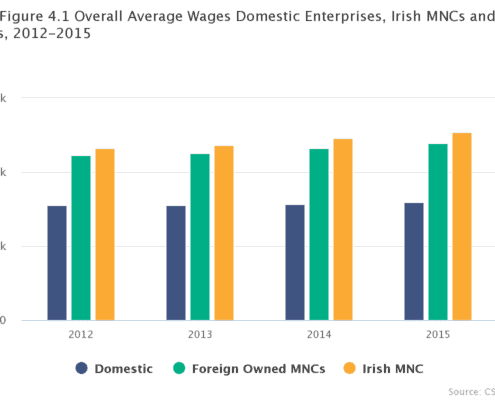
Company Size: Irish workers employed by large multinationals tend to earn more than those employed by smaller domestic organisations. For example, one study found that people employed by US multinationals in Ireland earn almost twice the average industrial wage.
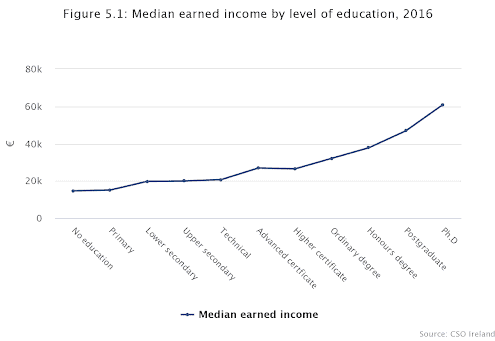
Education Level: Studies have found that your earned income tends to increase depending on your level of education. For example, according to data from the CSO the median earned income for those with a Ph. D was nearly five times higher than that of a person with no education. This is particularly the case in Ireland, where the earnings advantage for adults with a third-level qualification is larger in Ireland than on average across OECD countries.
Strategies On How To Answer The Salary Question
Deflect & Delay:
If you do not know how to answer the salary expectations question yet, then you can deflect it. Keep in mind that you will eventually have to discuss salary expectations, as such deflection will initially be the smart move. Delaying this conversation may put you in a better negotiating position later on in the process when you have convinced the interviewer that you are the best candidate for the job. As a rule, it’s best to keep your response short, polite and neutral.
Sample Responses:
- “Before I answer you, I’d like to learn more about the role and the company so I can give you a more accurate salary expectation.”
- “I’m seeking a competitive offer that includes benefits and other kinds of compensation, but I’d like to learn more about the specifics of what this job involves before I give my salary expectations.”
- “Let’s discuss the role requirements and expectations first, so I can get a better idea of what you need.”
Turn the Question on Them
Another option is to diplomatically flip the question on to the interviewer. In doing this, you signal to them that you are flexible on salary and you offer them the chance to take the lead in answering the question. If you succeed in coaxing a salary range out of the interviewer, then this will give you a useful reference point to use later on in the process. However, you will still need to do your homework to find out if this is a reasonable offer that aligns with your expectations.
Sample Responses:
- “That’s a great question—it would be helpful if you could share what the range is for this role.’’
- “You likely already have an idea of your budget for this position and what it is worth to the company, so it would be useful to know the salary range that you have in mind”
- “It’s hard to say as I don’t know how salaries are structured here. Is there health insurance, a bonus built-in somewhere, motor expenses, travel, holidays etc?”
Give a Range
Eventually, you will need to answer the question. When that time comes, provide a range rather than providing an exact figure as this will show that you are willing to be flexible. When discussing your desired salary range, be sure to cite your research and give your reasoning.
When setting your range, bear in mind that the employer may offer something on the lower end. As such, it’s a good idea to ensure that your target figure is quite close to the bottom number. We also advise you to keep your range somewhat narrow with a variance of no more than €5 – 10,000. However, take care not to set the amount too high or you could be considered overqualified.
What Not To Say
- If possible, try to avoid answering the question. Use deflection and delay tactics to learn more about the job or find a way to turn the question on them.
- Don’t lie. When it comes to salary expectations, honesty truly is the best policy.
- Don’t give an exact figure as this may be much higher or lower than the budgeted salary for the role.
- Don’t be negative in how you answer the question. Keep your response short and your tone positive.
- Wait until they bring up the topic of money. Raising the issue of the salary too early on in the process communicates that you’re more interested in the paycheck than the position.
- Don’t sound unprepared. Back up your answer by highlighting your reasoning and research.

Working With A Recruitment Consultant?
If you have partnered with a recruitment consultant for your job search, then it is highly unlikely that the hiring manager will ask you for your salary expectations. Rather you will privately discuss your salary goals with your recruiter and they will negotiate with the hiring manager on your behalf. The recruiter will advocate for you and help ensure a deal is reached that satisfies both parties. As such, going down the recruiter route is an ideal option if you dislike the thought of salary negotiations.
Advice From Our Consultants About How to Answer the Salary Expectations Question

When it comes to salary, always tell the truth about your current and expected package. This will help to eliminate any unrealistic expectations from both candidates and hiring managers. If you’re working through an agency then let the recruiter manage things as much as possible for you. However, if you’re asked about salary in an interview, ensure you’re giving accurate information. This is usually recorded by all parties, so saying one figure initially and another at the end of a process can cause issues with transparency. Remember, you are being asked about your current package so it can be improved on, not for any other reason.
Key Takeaways: How To Answer the Salary Expectations Questions
As is the case with any interview question, confidence is key when discussing your salary expectations. You need to know your worth in terms of salary. In order to feel confident in your response, do plenty of research about average salaries in your field and don’t forget to factor in any relevant factors. Be strategic in your answer so as to put yourself in the best position possible. For more advice on how to answer the salary expectations question in an interview, why not book a free consultation with one of Berkley’s in-house recruitment experts.

Download our 2022 Salary Guide Reports to Learn More Today!
Liked This? Why Not Read Our Other Guides On Commonly-Asked Job Interview Questions
- Why Do You Want to Work With Us?
- Tell Me About Yourself
- Why Did You Leave Your Previous Job?
- Why Should We Hire You?
- What Are Your Strengths & Weaknesses?
- How to Explain Gaps on Your CV in a Job Interview
- 25 Great Questions to Ask the Interviewer
- Give me an example of a time when you had to deal with conflict at work
- Understanding the Competency-Based Job Interview Style