Statement of Work or contingent workforce: understanding the practical differences
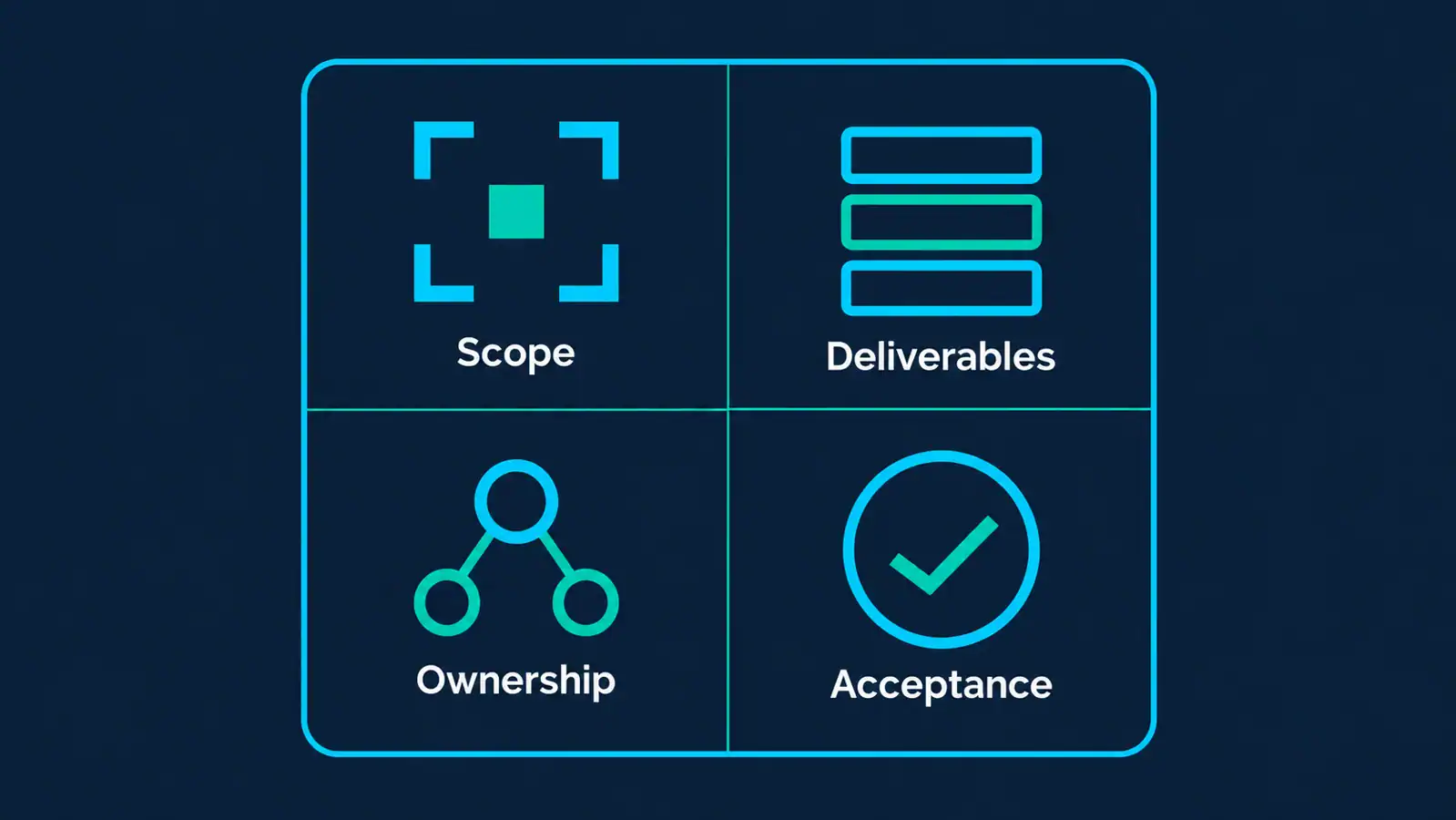
When comparing a Statement of Work engagement with specialist contractor support, establish what is being commissioned and how it will be managed. The useful distinction is in the agreed responsibilities, outputs and working arrangements.
For employers considering workforce solutions in Ireland, this is a practical scoping decision. Are you adding expertise within an established programme, or commissioning a provider to manage a defined package of work?
In this article, “contingent workforce” refers to specialist contractor deployment, reflecting Berkley’s engagement terminology. Some organisations use the term more broadly to include externally provided services as well. Define the terms at the start of any comparison.
Specify the requirement before comparing models
Write down the work that needs to be done and the internal management available to support it. Include the technical scope, relevant standards or site procedures, dependencies and intended duration.
Then distinguish between a requirement for a specialist contribution and a requirement for a managed deliverable. A contractor brief should explain the assignment and interfaces. A managed work-package brief should also explain what the provider is expected to coordinate, deliver and demonstrate at completion.
Do not assume that a document called a Statement of Work establishes all of these arrangements. Check what the proposed agreement actually says and how the work will operate in practice.
Make delivery responsibility explicit
For a specialist deployment, clarify how the person will work within the client’s programme structure. Identify who sets priorities, provides technical direction, resolves queries and reviews the output.
For a managed service proposal, ask the provider to explain its delivery responsibilities. Which activities will it coordinate? Which decisions remain with the client? Who manages interfaces and reports progress?
Neither model removes the need for active client involvement. Record the information, access, approvals and decisions the client must provide. Make sure the proposed start date and milestones reflect those dependencies.
These questions are useful even when the same organisations have worked together before. A new work package may have different responsibilities from the previous one.
Agree how completion will be assessed
For a defined service, describe the deliverables in enough detail for both parties to understand what is being accepted. Identify the reviewer, acceptance criteria, supporting evidence and process for resolving outstanding items.
For an individual specialist assignment, agree the expected contribution and reporting arrangements. Record how progress will be reviewed and how the assignment connects to the wider programme’s milestones.
Avoid treating a broad phrase such as “support the project” as a complete description of success. Ask what the receiving team should be able to inspect, use or decide as a result of the work.
Where the scope is still developing, identify the discovery needed before committing to detailed outputs. A short scoping stage may be a more useful starting point than pretending all deliverables are already known.
Put change management into the discussion
Agree how changes will be proposed, assessed and approved. A useful process identifies the person who can request a change, the information needed to assess it and who can authorise any effect on scope, timing or cost.
For a contractor assignment, this may involve reviewing priorities, responsibilities or duration. For a managed work package, it may involve revised deliverables and acceptance arrangements. The specific mechanism belongs in the agreement.
Keep a record of decisions and communicate the approved change to the people performing and reviewing the work. Unrecorded assumptions should not become the basis for judging completion later.
Compare commercial proposals on the same basis
Ask each provider to state what its proposal includes and what depends on the client. Compare the resource contribution, delivery management, reporting, review process and handover alongside the price.
Do not infer a payment model from the engagement label. Confirm whether the proposal uses time-based charges, milestones, another basis or a combination, and what happens when agreed assumptions change.
Likewise, do not treat the label as a conclusion about employment status, tax treatment or regulatory responsibilities. Those questions require assessment of the specific arrangement by the relevant specialists. This article addresses delivery planning rather than making those determinations.
A published Berkley example
Berkley’s Gilead case study describes professional services delivered under tailored Statements of Work through its Design | Build | Run model. It explains that project scope and timeframe are agreed with the client and that a Berkley Project Manager works with the wider team on delivery.
The example illustrates a defined professional service structure. It should not be used to assume that every Berkley contractor assignment carries the same delivery responsibilities, or that one client’s arrangement automatically suits another programme.
When reviewing a proposal, ask the provider to show how the proposed responsibilities apply to your specific package.
Bring a short decision brief to the discussion
Before choosing the arrangement, capture the answers to these questions:
- What exactly are we commissioning, and what is outside the scope?
- Who will direct and coordinate the work?
- What must our internal team provide, and when?
- How will progress and completion be assessed?
- Who can approve a change to scope, cost or timing?
- What must be handed over at the end of the engagement?
If the answers remain unclear, use the next conversation to resolve them. A well-defined brief is more useful than selecting a model before understanding the work.
Discuss the right structure for your programme
Berkley offers Professional Service Engagements, Contingent Workforce Solutions and Specialist Placements. Bring the scope, internal management structure and intended outputs to the discussion.
Speak to Berkley about a workforce engagement that fits your programme.