How to Write a Resignation Letter
Turning in your notice? Read our guide to learn how to write a resignation letter that will help you leave your job on good terms.
Congratulations! You’ve submitted a great CV, aced the interview, and landed your dream job! Now’s the time to wind up your old job so you can move on to pastures new. It’s never easy to say goodbye, but handing in your resignation is something that everyone has to do at some point in their career. If you are currently switching roles and don’t know how to kickstart the process of moving on, then you should read our comprehensive guide below on how to write a resignation letter.
Table of Contents
- The Great Resignation is Coming
- What is a Resignation Letter?
- Why is it Necessary to Hand In A Resignation Letter?
- What to Include in A Resignation Letter?
- What Not to Include In A Resignation Letter
- How to Write a Resignation Letter: A Step-By-Step Guide
- More Tips for Writing Resignation Letters
- How Much Notice Should You Give?
- When to Hand In Your Notice of Resignation
- How Do You Write A Good Resignation Letter?
The Great Resignation
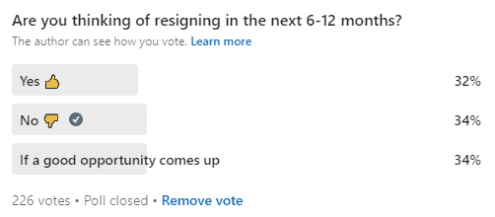
One of the more unexpected consequences of the ongoing COVID-19 pandemic has been “The Great Resignation” phenomenon. This term was coined by Professor Anthony Klotz to describe the imminent mass resignations following the uncertainty of the pandemic. He explains, “When there’s uncertainty, people tend to stay put, so there are pent-up resignations that didn’t happen over the past year.” Data backs this up, a survey of UK and Irish workers found that 38% of respondents said they would be looking to change roles in the next six to twelve months or once the economy has strengthened.
What is a Resignation Letter?
A resignation letter (also known as a leaving work notice) is an official document that formally announces your resignation. Put simply, it’s an official form of quitting. In addition to providing an official record of notice, a resignation letter also includes details about the employee’s last day and lays out the next steps. It can take the form of a written letter or an email.
Why is it Necessary to Hand In A Resignation Letter?
You should always hand in an official letter of resignation before leaving a job.
Giving your employer a formal notice is the courteous and professional thing to do. Giving your employer plenty of notice of your intention to leave shows great consideration for their needs. This will go a long way to help you maintain a positive relationship and will allow you to leave on good terms. What’s more, doing things the right way will also make your employer more inclined to give you a positive reference.
What to Include in A Resignation Letter?
- A clear statement of your intention to resign
- The date of your final day at work
- A brief explanation of why you are resigning
- A short thank-you note

What Not to Include In A Resignation Letter
Your resignation letter is a professional document so it is not an appropriate place to air your grievances. No matter how much you disliked your job, you will still need a reference so tact is key. Keep your language neutral and professional and don’t include any complaints about the company, your manager or colleagues.
How to Write a Resignation Letter: A Step-By-Step Guide
Subject Line
If you are handing in your resignation via email, then you will need to carefully consider your subject line. As a rule, it’s best to keep your subject line clear and descriptive. Some options are:
- Two Weeks’ Notice
- Notice of Resignation
- Resignation Announcement – [Your Name]
- Resignation as of [Date] – [Your Name]
- Official Notice of Resignation
Header
If you are handing in a hard copy of your resignation letter, then you will need to start with your contact information, the date and your employer’s contact details. This is standard etiquette for all formal communication. Here is a basic heading order:
- Your name
- Your address
- Your phone number
- Your email address
- Date of letter
- Recipient’s name
- Recipient’s address
- Recipient’s phone number
- Recipient’s email address
Greeting
Depending on the management structure at your company, you will need to address the letter to your manager or HR representative. Include a polite salutation, such as “Dear” or “Hello” before addressing them. If you have a familiar relationship with the recipient, you can use their first name. Otherwise, use a formal address such as Mr, Ms, Dr etc.
Opening Paragraph
Your opening paragraph should provide a brief statement of your intention to leave and set out your last official day. This section should be no more than two lines long.
Example 1: “I am writing to notify you of my resignation from my role as QA Manager at Fake Company. In accordance with the notice period in my employment contract, my last day in employment will be July 31st.”
Example 2: “With regrets, I am writing to inform you that I will be resigning from my position as Data Scientist at Fake Company. My last day of work will be Monday August 2nd, 2021.”
Second Paragraph
In the main body of the letter, you can explain the reasoning behind your decision to resign. You don’t have to go into a lot of detail on this. This section is optional but it may be helpful in keeping a positive relationship with your soon-to-be former employers. Keep the content and tone of this section neutral so as not to burn any bridges.
Example 1: “I was recently offered a new opportunity at a different company, and have decided to accept.”
Example 2: “I am leaving because I have been accepted into a full-time Master’s program at University College Cork.”
Third Paragraph
It’s good practice to offer to work for your full notice period and to help with the transitionary period. Explain to your employer that you will wrap up key tasks and train your co-workers and/or replacements on any outstanding projects. You may also offer to assist with hiring your replacement.
Example 1: “I intend to work for my full notice period. Please let me know if I can assist in the transition process.”
Example 2: “During my notice period, I will work to ensure a smooth transition by wrapping up all my duties and training my successors and/or teammates. Please don’t hesitate to let me know if there’s anything else I can do.”
Conclusion
Ideally, you should end your resignation letter on a positive note. Thank your employer for the opportunity to work at their company. You can elaborate on this by listing some skills you honed in your time at the company.
Example 1: “I would like to thank you for giving me the opportunity to work at Fake Company. I’ve greatly enjoyed my time here and appreciate the opportunities the role has given me to grow and develop professionally. I would like to wish my colleagues and the company all the success, and I hope to stay in touch with all of you in the future.”
Example 2: “Many thanks for giving me the opportunity to work at Fake Company. It has been a fantastic experience, and I appreciate the opportunity to develop my leadership and technical skills while in this position. I will always be grateful to you for going above and beyond to ensure my wellbeing and success at this position.”
Closing & Sign-Off
Conclude the letter with a closing statement such as “Best regards”, “Sincerely” or “Thank you.” Finish off with a handwritten signature followed by your typed name. For email, you just need to include your e-signature.
More Tips for Writing Resignation Letters
- Keep a copy for your own records and to serve as proof of your last day
- Keep it short – one page should be sufficient.
- Use a standard font such as Times New Roman, Arial, or Calibri.
- Always proofread before sending.
How Much Notice Should You Give?
Notice periods vary from company to company. To find out how much notice your employer requires, take a look at your contract of employment. If your contract doesn’t specify a notice period, you must follow Irish law which stipulates a statutory minimum notice of one week.
If you have partnered with a recruiter for your job search, be sure to inform them of your notice period at the outset. They can then pass this information on to prospective employers on your behalf.

When to Hand In Your Notice of Resignation
Generally speaking, it’s best to announce your resignation in a private face-to-face meeting with your manager. If you work remotely, then you should try to at least arrange a phone/video call with your manager about your resignation. You can then send your official letter of resignation after this. It may be a good idea to pepper your letter with some of the main points discussed during your conversation.
What Happens Next?
After handing in your formal notice of resignation, you will need to take responsibility to ensure a smooth transition to your replacement. This may involve wrapping up unfinished projects, creating handover documents, and arranging meetings with colleagues who are taking over some of your responsibilities.
In some cases, you may also be asked to attend an exit interview with a representative from management or HR. For advice on how to have a successful exit interview, check out our dedicated guide “How to Answer Exit Interview Questions.”
Takeaways: How Do You Write A Good Resignation Letter?
In conclusion, a good resignation letter is clear, professional and to the point. In addition to communicating key information about your notice, a well-written resignation letter will help you to leave your job on good terms with your employer. For more advice on how to write a resignation letter, get in touch with our team today.