How to Answer Exit Interview Questions
Leaving your old job for pastures new? Read our guide for advice on how to answer common exit interview questions.
2021 is seeing an unprecedented number of employees quitting or preparing to quit their jobs. Dubbed “The Great Resignation”, this global phenomenon has highlighted a widespread dissatisfaction amongst workers following on from the pandemic. A recent survey of 1,000 Irish employees from the Kemmy Business School WorkFutures Lab has shown that Ireland is no exception to this phenomenon, with 40% of respondents agreeing with the statement “my future career lies outside of this organisation”.
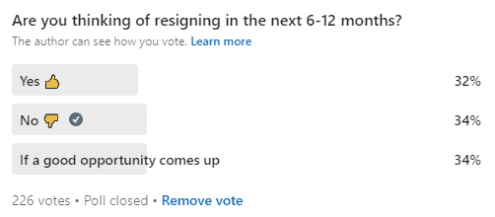
If you are planning on joining “The Great Resignation”, then chances are that you will need to complete an Exit Interview with your old employer. Take a look at our guide below to find out more about how to get the most out of your exit interview.
Table of Contents
- What is an Exit Interview?
- Why are Exit Interviews Important?
- Statistics about Exit Interviews
- 20 Common Exit Interview Questions
- How to Answer Exit Interview Questions
- What Not To Say In An Exit Interview
- Key Takeaways
What is An Exit Interview?
When an employee hands in their notice of resignation, their employer may ask them to attend an exit interview on their final day of work. An exit interview is a meeting between organisation representatives (e.g. an HR representative, a manager or a third-party HR service provider) and the departing employee to ascertain the reasons why the employee has decided to leave and to gather feedback on the time they spent with the company. Exit interviews may take the form of a face-to-face meeting or a form.
Why Are Exit Interviews Important?
Why Exit Interviews Are Important for Employers
There are several reasons why employers should treat exit interviews as more than a mere box-ticking exercise. Firstly, making a genuine effort to understand why an employee has chosen to leave helps to promote goodwill and ensure that the relationship ends on a positive note. What’s more, the feedback gathered from this interview is highly valuable because it allows your organisation to get another perspective on the workplace culture, daily processes, management solutions, and staff morale. These insights can then be used to guide ongoing improvements to recruitment and retention activities. On a more practical note, exit interviews provide an opportunity to tie up administrative loose ends.
Why Exit Interviews Are Important for Employees
Attending an exit interview van help ensure that you leave your employer on good terms. What’s more, it gives you a chance to reflect on your experiences and provide honest and constructive feedback to your former employer. If your employer chooses to act on this feedback, then it may help improve the working life of your colleagues as well as future employees.
Statistics About Exit Interviews
- 91% of Fortune 500 companies conduct employee exit interviews, and 87% of mid-sized companies do the same. (Source: Burke Incorporated)
- 60% of HR professionals take action after an exit interview by updating job descriptions, addressing comments about management and reviewing employee salaries. (Source: OfficeTeam)
- 70.9% of exit interviews are handled by HR departments handle; 19% had the departing employees’ direct supervisors do it; 8.9% delegated the job to the direct supervisor’s manager, and 1% turned to external consultants. (Source: Harvard Business Review)
20 Common Exit Interview Questions
- How was your overall experience working for this company?
- Why have you decided to leave your position?
- What ultimately led you to accept the new position?
- Do you have any feedback or suggestions on how management could improve?
- Do you think you were provided with sufficient training?
- Did you feel equipped to do the job here?
- Were you given clear goals and objectives?
- Do you feel that your job description changed since you started? If so, how?
- Did you feel like a valuable part of the company?
- How would you describe the culture here?
- Do you think the company supported your professional development?
- Would you recommend this company to others seeking employment?
- What could have been done for you to remain employed here?
- Did you share your concerns with anyone at the company prior to leaving?
- Would you ever think about returning here in the future? If so, what would need to change?
- Were you happy with the benefits offered?
- Did you feel like your achievements were recognised?
- Did you feel like the company supported your career goals?
- What skills would you consider necessary for your replacement?
- How can we improve our training programs?
How to Answer Exit Interview Questions
If you have been invited to attend an exit interview, we recommend investing some time and effort into proper preparation so you can answer questions in a strategic way. You need to toe the line between providing a relatively truthful account of your experiences while not burning any bridges. This is especially the case if you want to get a glowing recommendation.
Based on prior experience, consider how the interviewer is likely to respond to feedback. Ask yourself if they are likely to be open-minded and receptive? Or do you think they will react poorly to criticism and potentially become vindictive? Based on this, think carefully about the topics you want to cover and just how “honest” you should be about your experiences.
If you feel that you have a good enough relationship with the company that they are likely to be receptive to some constructive criticism, then it is wise to frame your feedback in a positive way. For example, instead of saying “I was not given anywhere near enough training to perform my job”, you could say “Training is a ‘growth area’ for the company. There were times when I felt that I could’ve been given more opportunities to develop my skills.”
What Not To Say In An Exit Interview
Your exit interview is not the place to air grievances. Citing a long list of complaints to the interview will only serve to damage your relationship with the company and will make it hard for you to leave on good terms. If you do have some pieces of “constructive criticism” that you think could genuinely benefit the company then you will need to tread carefully. Couch your critique in positive or neutral language and always back up your claims with concrete or data-based examples. Otherwise, it’s best to hold your tongue until you can let it all out over cocktails with a friend.
Likewise, your exit interview is not the time to throw people under the bus. This will reflect poorly on you by making you seem petty and disagreeable. However, it could be worth bringing up the behaviour of others if it has breached company rules or has contributed to a poor workplace environment. Again, keep your tone neutral and back up your claims with solid evidence rather than hearsay or gossip.

How to Answer Exit Interview Questions: Key Takeaways
An exit interview is a formal HR process that will go on the record, so your guiding principle should be to maintain professionalism. No matter what your experience of the company was, strive to keep the tone, language and of your feedback professional. Staying upbeat and friendly will go a long way to helping you leave your job on good terms.
If you’re starting to plan your next career move, why not book a free consultation with one of Berkley’s expert Recruitment Consultants? They can advise you on the latest industry trends and find roles that are perfectly suited to your skills and interests. Contact us to learn more today!