What is Salary Benchmarking? A Guide for Employers in Ireland
Salary benchmarking is essential for employers who want to remain competitive in today’s tight labour market. This process allows employers to quickly identify and adapt to labour market developments and out their competitors in the War for Talent.
Table of Contents
What is Salary Benchmarking?
“Benchmarking is the practice of comparing business processes and performance metrics to industry bests and best practices from other companies.” ~ Wikipedia
Salary benchmarking refers to the process of collecting information on salary and benefits packages offered by similar organisations operating in the same industry. This data can be further broken down by location, industry, company size and so on. This research provides human resources (HR) teams with a useful comparative framework that they can then use to calculate salaries for specific roles.
Salary benchmarking is a detailed comparative remuneration process that enables organisations to evaluate how competitive they are within the labour marketplace. Conducting this exercise regularly ensures that your organisation is keeping up with market developments. As such, salary benchmarking has become standard global best practice for companies of all industries and sizes.
Ireland’s Salary Landscape in 2022
Despite the turmoil of the past two years, Ireland is enjoying a buoyant employment market and is expected to return to full employment by 2024. In particular, there has been a surge in demand for skilled employees across the tech, engineering, life science and supply chain sectors.
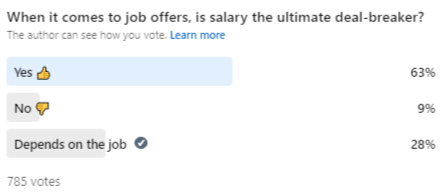
However, a combination of skills shortages, high employee turnover, and pandemic-induced disruption has resulted in a fiercely competitive market in which candidates are very much in the driving seat. We are also seeing pent-up demand for salary increases among employees who took pay cuts or remained in lower-paying jobs during the pandemic. What’s more, with inflation rates reaching a 21-year high of 5.5% in December, in-demand candidates who know their worth are now seeking out higher salaries either through pay rise requests or by changing jobs.
The Benefits of Salary Benchmarking
Talent Attraction & Retention
In today’s volatile jobs landscape, it is those employers who arm themselves with up-to-date and accurate salary data who are the most likely to win out in the war for talent. Top professionals will gravitate towards “employers of choice” that they perceive to offer a fair and competitive salary and benefits package. From a retention point of view, employers who have conducted a thorough benchmarking exercise will be prepared when employees request pay rises. As such, salary benchmarking plays a critical role in talent attraction and retention strategies.
Hiring in a New Market/Industry
Salary benchmarking is also an immensely useful activity for organisations that are new to the market or who are hiring in an unfamiliar area. Performing a comprehensive study of the going market rates can help employers to define costs and determine budgets for new roles. This will then enable them to set alluring compensation packages for new positions that are competitive in the market.
Ensuring Fair & Equal Compensation
“According to WorkEqual, the 8th of November marks the date on which women symbolically stop earning, on average relative to men, because of the gender pay gap.”
Another key advantage of salary benchmarking is that it can help tackle wage discrepancies across different groups. Study after study reveals that women and people of colour earn less than their white male counterparts across a wide range of roles and industries. What’s more, professionals who are affected by the pay gap often become trapped in a cycle of lower pay if objective salary information is not made available. Salary benchmarking provides objective information that employers can use to make fair, non-discriminatory salary decisions.
Why You Should Also Benchmark Company Benefits & Perks
In 2022, many companies do not have the budget to keep up with ever-rising salary inflation. In cases like this, it may prove useful to benchmark the benefits and perks offered by your competitors. This information will enable your team to create a compensation package that appeals to more than just the candidate’s financial motivations.
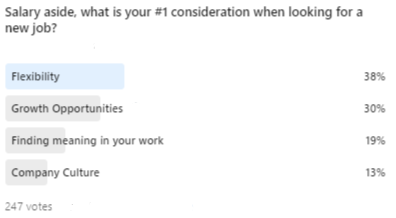
For example, you may find that providing schedule flexibility, remote working, and above-average annual leave in addition to a fair salary may be more attractive to candidates than simply paying a higher salary but none of these benefits.
In today’s highly competitive labour market, benchmarking total compensation packages, including benefits, will ensure that your organisation is offering overall packages which stand out from your competitors.
How Do You Conduct a Salary Benchmarking Exercise?
Step 1: Design a Goal-Oriented Process
Your first step will be to decide what information you need and how you will gather it. To do this, define your goals and then identify what data points will best allow you to achieve those goals. You may find that the type of data you require will vary depending on the group of people you are studying. We find that a good starting point is to ask yourself “Where do the people we hire come from and where do they go when they leave us?”
Once you have defined your required data points, you will then need to create a clear, structured process that you can easily repeat again and again. At this point, you will have a better understanding of the project scope so it’s a good time to figure out whether it’s something that can be done in-house or if you will need support from a third-party expert such as a specialist Recruitment Consultancy.
Step 2: Collect Your Data
Now that you have completed the planning stage, the data collection process may commence. You can gather compensation data in a variety of ways, including survey data, HR-reported aggregate market data, and even employee-reported data. When compiling your data, ensure that it is easy to navigate by grouping together similar jobs. You may further segment your data by including additional information on location, industry, company size, and experience level.
In many cases, you will need to secure approval from key decision-makers for any new compensation strategy. As such, it’s important to remember your audience when collecting and presenting your data. You will need to ensure that your data can stand up to scrutiny by being scrupulous in verifying data, referencing sources and providing supporting evidence.
Step 3: Determine A Compensation Strategy
The salary benchmarking process will provide you with the requisite information to set pay structures that are externally competitive and internally equitable. Having compared the data against your own budgets, you can determine your desired market position and set a target percentile. Be sure to choose a target that both aligns with your own pay philosophy while also giving you sufficient wiggle room for negotiation with candidates.

Useful Salary Benchmarking Tools
If you are planning on conducting a Salary Benchmarking exercise in 2022, then you could kickstart the process by downloading a copy of Berkley’s latest Salary Guide report or our 2022 Contracting Rate Report. Our consultants have collated data on 300+ roles and have devised three reports covering each of our core specialities – Business & Technology, Life Science & Engineering, and Supply Chain & Procurement.