Having put in several years of hard graft at a multinational tech company in Cork, it seemed like Robert was all set for a career in Cloud Computing. “In my time there, I started by working on tech support and then moved on to client account management.” Something clicked when he moved to account management, “I realised that this was something I really enjoyed and I wanted to find a role that brought together my technical knowledge with my client management experience.”
The pieces all came together following a conversation with a recruiter buddy. “He said that I had the right skill set for a career in IT recruitment. It was a perfect match for all the things I had learned in the 6-7 years prior.”
After a brief transition period, Robert soon unearthed a passion for the recruitment game. “Once I got started in recruitment, I couldn’t see myself doing anything else. I soon became addicted to it. It’s like a game – you’re always analysing your performance and that motivates you to constantly level up.”
Keeping Up in the Fast-Paced World of Development
At Berkley, Robert is the go-to guy for all things development. “I really enjoy the learning aspect of the role. Software development is changing all the time, so it’s important to keep up with the latest changes and news.”
In recent months, he has gone the extra mile and has started his own coding journey. “My tech background is in infrastructure. I wanted to learn more about development so I could speak the language of clients and candidates. I didn’t expect to enjoy it as much as I do, but I’ve found it to be quite fun! ”
An avowed self-improver, it’s no surprise that Robert was attracted to the fast-paced world of development. “Development professionals need to be able to soak in new information every day. The development world attracts the kind of people who have a strong thirst for knowledge and who are always looking for the next thing. With that kind of personality, these guys can stay in the game for a long time and operate at a very high level.”
Tips for Climbing Up the Development Career Ladder
So does Robert have any words of wisdom for young or aspiring developers? “One great way to develop your skills is by working in a role that will expose you to the latest technologies. When job hunting, look carefully at the job description and think about whether the languages, tools and development structures that you’ll be working with day-to-day are future-proof.”
“In terms of languages and frameworks, I think there will be a huge demand for people with expertise in Golang, Kotlin and React.“
Interested in a career in IT & Tech Recruiting? Talk to Berkley today to learn more about open roles on our Business & Technology team.
https://www.berkley-group.com/wp-content/uploads/2021/07/Rob-resized.jpg400495Robert Hawkeshttps://www.berkley-group.com/wp-content/uploads/2026/05/Berkley-Group-Logo-2026.svgRobert Hawkes2021-08-02 07:00:092021-08-03 13:01:07Meet the Team: Robert O’Leary
Berkley PROSOURCED was recently awarded the ‘Best Newcomer Award 2021’ by Hays Talent Solutions.
This award was based on Berkley’s work for their UK-based MSP program with a renowned multinational pharmaceutical and biotechnology company. The award is in recognition of the exceptional delivery of quality skilled tech resources to the program within strict delivery schedules.
Berkley would like to thank Hays Talent Solutions for the award. We would also like to acknowledge the excellent work of David Maverley, the Head of International Talent Delivery, and Paddy O’Connell, CEO of Berkley International, who are spearheading the award-winning project.
Speaking on the win, David Maverley commented:
“We are absolutely thrilled to win this award. I think the award really speaks to the power of our MSP Partner Solution, PROSOURCED, which brings together the very best of human insight and a leading AI Platform to deliver a consistent supply chain of the most suitable candidates with speed and pinpoint accuracy.”
About Berkley PROSOURCED
PROSOURCED marries Berkley’s consultant expertise with a state-of-the-art artificial intelligence technology to deliver candidates with the speed and precision required in today’s fast-paced business environment. All members of the PROSOURCED Talent Network are pre-vetted and are skilled in high-demand areas such as Cybersecurity, Data & Analytics, Cloud & Digital Technology and more.
Turning in your notice? Read our guide to learn how to write a resignation letter that will help you leave your job on good terms.
Congratulations! You’ve submitted a great CV, aced the interview, and landed your dream job! Now’s the time to wind up your old job so you can move on to pastures new. It’s never easy to say goodbye, but handing in your resignation is something that everyone has to do at some point in their career. If you are currently switching roles and don’t know how to kickstart the process of moving on, then you should read our comprehensive guide below on how to write a resignation letter.
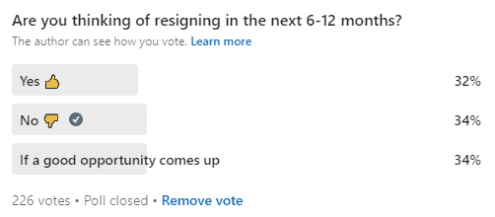
One of the more unexpected consequences of the ongoing COVID-19 pandemic has been “The Great Resignation” phenomenon. This term was coined by Professor Anthony Klotz to describe the imminent mass resignations following the uncertainty of the pandemic. He explains, “When there’s uncertainty, people tend to stay put, so there are pent-up resignations that didn’t happen over the past year.” Data backs this up, a survey of UK and Irish workers found that 38% of respondents said they would be looking to change roles in the next six to twelve months or once the economy has strengthened.
What is a Resignation Letter?
A resignation letter (also known as a leaving work notice) is an official document that formally announces your resignation. Put simply, it’s an official form of quitting. In addition to providing an official record of notice, a resignation letter also includes details about the employee’s last day and lays out the next steps. It can take the form of a written letter or an email.
Why is it Necessary to Hand In A Resignation Letter?
You should always hand in an official letter of resignation before leaving a job.
Giving your employer a formal notice is the courteous and professional thing to do. Giving your employer plenty of notice of your intention to leave shows great consideration for their needs. This will go a long way to help you maintain a positive relationship and will allow you to leave on good terms. What’s more, doing things the right way will also make your employer more inclined to give you a positive reference.
Your resignation letter is a professional document so it is not an appropriate place to air your grievances. No matter how much you disliked your job, you will still need a reference so tact is key. Keep your language neutral and professional and don’t include any complaints about the company, your manager or colleagues.
How to Write a Resignation Letter: A Step-By-Step Guide
Subject Line
If you are handing in your resignation via email, then you will need to carefully consider your subject line. As a rule, it’s best to keep your subject line clear and descriptive. Some options are:
Two Weeks’ Notice
Notice of Resignation
Resignation Announcement – [Your Name]
Resignation as of [Date] – [Your Name]
Official Notice of Resignation
Header
If you are handing in a hard copy of your resignation letter, then you will need to start with your contact information, the date and your employer’s contact details. This is standard etiquette for all formal communication. Here is a basic heading order:
Your name
Your address
Your phone number
Your email address
Date of letter
Recipient’s name
Recipient’s address
Recipient’s phone number
Recipient’s email address
Greeting
Depending on the management structure at your company, you will need to address the letter to your manager or HR representative. Include a polite salutation, such as “Dear” or “Hello” before addressing them. If you have a familiar relationship with the recipient, you can use their first name. Otherwise, use a formal address such as Mr, Ms, Dr etc.
Opening Paragraph
Your opening paragraph should provide a brief statement of your intention to leave and set out your last official day. This section should be no more than two lines long.
Example 1: “I am writing to notify you of my resignation from my role as QA Manager at Fake Company. In accordance with the notice period in my employment contract, my last day in employment will be July 31st.”
Example 2: “With regrets, I am writing to inform you that I will be resigning from my position as Data Scientist at Fake Company. My last day of work will be Monday August 2nd, 2021.”
Second Paragraph
In the main body of the letter, you can explain the reasoning behind your decision to resign. You don’t have to go into a lot of detail on this. This section is optional but it may be helpful in keeping a positive relationship with your soon-to-be former employers. Keep the content and tone of this section neutral so as not to burn any bridges.
Example 1: “I was recently offered a new opportunity at a different company, and have decided to accept.”
Example 2: “I am leaving because I have been accepted into a full-time Master’s program at University College Cork.”
Third Paragraph
It’s good practice to offer to work for your full notice period and to help with the transitionary period. Explain to your employer that you will wrap up key tasks and train your co-workers and/or replacements on any outstanding projects. You may also offer to assist with hiring your replacement.
Example 1: “I intend to work for my full notice period. Please let me know if I can assist in the transition process.”
Example 2: “During my notice period, I will work to ensure a smooth transition by wrapping up all my duties and training my successors and/or teammates. Please don’t hesitate to let me know if there’s anything else I can do.”
Conclusion
Ideally, you should end your resignation letter on a positive note. Thank your employer for the opportunity to work at their company. You can elaborate on this by listing some skills you honed in your time at the company.
Example 1: “I would like to thank you for giving me the opportunity to work at Fake Company. I’ve greatly enjoyed my time here and appreciate the opportunities the role has given me to grow and develop professionally. I would like to wish my colleagues and the company all the success, and I hope to stay in touch with all of you in the future.”
Example 2: “Many thanks for giving me the opportunity to work at Fake Company. It has been a fantastic experience, and I appreciate the opportunity to develop my leadership and technical skills while in this position. I will always be grateful to you for going above and beyond to ensure my wellbeing and success at this position.”
Closing & Sign-Off
Conclude the letter with a closing statement such as “Best regards”, “Sincerely” or “Thank you.” Finish off with a handwritten signature followed by your typed name. For email, you just need to include your e-signature.
Notice periods vary from company to company. To find out how much notice your employer requires, take a look at your contract of employment. If your contract doesn’t specify a notice period, you must follow Irish law which stipulates a statutory minimum notice of one week.
If you have partnered with a recruiter for your job search, be sure to inform them of your notice period at the outset. They can then pass this information on to prospective employers on your behalf.
When to Hand In Your Notice of Resignation
Generally speaking, it’s best to announce your resignation in a private face-to-face meeting with your manager. If you work remotely, then you should try to at least arrange a phone/video call with your manager about your resignation. You can then send your official letter of resignation after this. It may be a good idea to pepper your letter with some of the main points discussed during your conversation.
What Happens Next?
After handing in your formal notice of resignation, you will need to take responsibility to ensure a smooth transition to your replacement. This may involve wrapping up unfinished projects, creating handover documents, and arranging meetings with colleagues who are taking over some of your responsibilities.
In some cases, you may also be asked to attend an exit interview with a representative from management or HR. For advice on how to have a successful exit interview, check out our dedicated guide “How to Answer Exit Interview Questions.”
Takeaways: How Do You Write A Good Resignation Letter?
In conclusion, a good resignation letter is clear, professional and to the point. In addition to communicating key information about your notice, a well-written resignation letter will help you to leave your job on good terms with your employer. For more advice on how to write a resignation letter, get in touch with our team today.
If you’re ready for your next career move and want to explore your options, get in touch with one of our expert Recruitment Consultants today.
https://www.berkley-group.com/wp-content/uploads/2021/07/jan-tinneberg-gJJhG4gM7NA-unsplash-scaled-e1626949506118.jpg400495Robert Hawkeshttps://www.berkley-group.com/wp-content/uploads/2026/05/Berkley-Group-Logo-2026.svgRobert Hawkes2021-07-22 11:26:222022-08-05 09:27:17How to Write a Resignation Letter
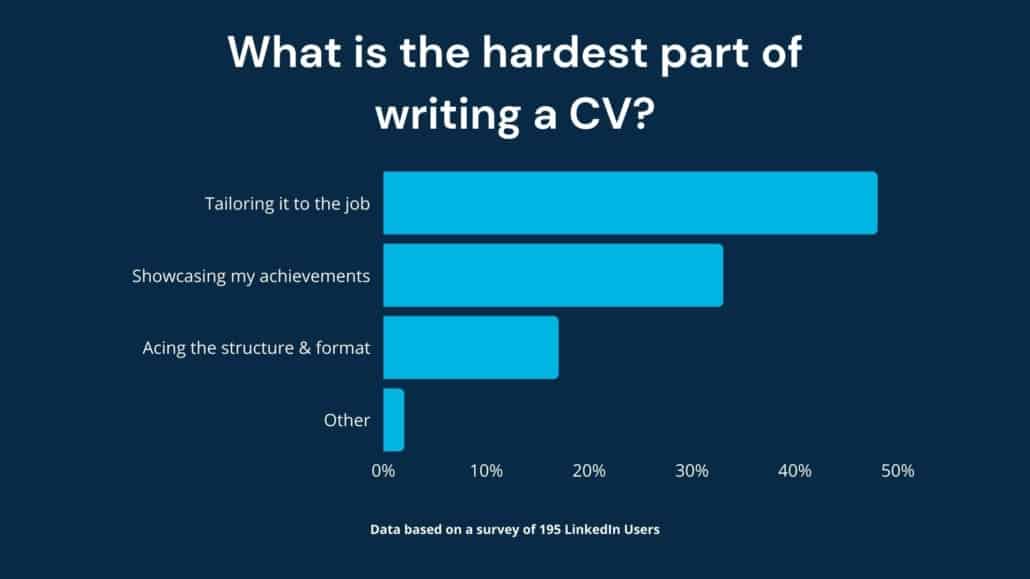
In 2021, Berkley ran a LinkedIn poll about the hardest part of writing a CV to which 48% of respondents said “tailoring it to the job”. In this article, we will explain why it’s important to learn how to tailor your CV to every job application and we will walk you through a step-by-step guide on how to customise your CV to a job description.
The Importance of Knowing How to Tailor Your CV to a Job Description
“To succeed in today’s job market, you have to think of your resume as an advertisement targeted towards your future boss.”
When applying for a role, submitting a customised CV will give you a major advantage over the other job candidates. A tailored CV should clearly demonstrate your alignment with the technical requirements of the role and indicate a strong cultural fit with the hiring organisation. Your CV should “connect the dots” for recruiters and hiring managers by providing clear evidence of why you would be the best fit for the role.
What’s more, investing time and effort into customising your CV shows a level of diligence and thoughtfulness that will mark you out as a cut above the other applicants. This tells the recruiter that you’re serious about the application and are genuinely enthusiastic about the role.
If you have partnered with a recruitment consultant in your job search efforts, they will advise you on how to best tailor your CV to each role that you apply for.
What’s the Difference Between A Generic & A Tailored CV?
A generic CV is an unchanging document that a job seeker sends as part of every job application. It plainly lays out a candidate’s experience, skills and qualifications and leaves it up to the hiring manager to identify the elements most relevant to the role. As such, this approach makes it all about the candidate rather than the hiring organisation.
As a rule, it is good to use a generic CV as your base template. This means that rather than starting the document from scratch for every application, you simply have to customise for the role.
On the other hand, a tailored CV clearly shows how the candidate’s abilities tie in with the specifications of the role and needs of the organisation. This greatly cuts down work for the hiring manager by clearly and effectively communicating why you would be the best fit for the role and how you can add value to the organisation.
A job spec is the ‘wish list’ for a hiring manager. If you have specific experience that matches a job spec, ensure you’re adding that detail so it jumps out to someone reading your CV – spending that extra five minutes including relevant experience will help you to secure that first-round interview.
Louise O’NeillBusiness & Technology Manager
Customised CVs & Knowing Your Audience
All writers need to know their audience. In the case of the CV-writer, your audience is a recruiter and/or a hiring manager and a tool called an Applicant Tracking System (ATS).
In today’s highly competitive jobs market, some recruiters can receive up to 250 CVs for an advertised vacancy. It’s too time-consuming to review each CV manually so many recruiters have turned to technology to filter out the least suitable applications. ATS technology is used by 99% of Fortune 500 companies in order to quickly sort, filter, and search incoming CVs. The recruiter/hiring manager will then manually review the remaining applications and use their own judgment to identify the strongest candidates to progress onto the interview stage.
As such, you need to know how to tailor your CV in such a way as to meet the requirements of an ATS while also reading well to a human. To learn more about how to “beat the bots”, read our dedicated guide “Boost Your Chances of Job Search Success with an AI-Friendly CV”.
When tailoring your CV to a job description, it’s always best to pull at least two soft skills and two technical skills from the description and present them at the forefront of your CV.
Saoirse O’MalleySenior Business & Technology Recruitment Consultant
How To Tailor Your CV To A Job Description: A Step-by-Step Guide
Read The Job Description Carefully
Did you know that most job seekers spend just 76.7 seconds reading a job posting before deciding to apply? Before even thinking about putting pen to paper, make sure that you fully understand the role requirements and whether they are a match for your skillset. Start by carefully reading the job description from beginning to end and then re-read it.
Identify Keywords
The next step is to identify important keywords and phrases. Look out for repeated terms and pay attention to what points are mentioned first as this may give you a better understanding of the employer’s priorities.
Copy and paste the job description into a word document and bold any skills, responsibilities, qualifications, and qualities that are mentioned. If the description is light on keywords, then there are a few ways you can find complementary keywords:
Take keywords from job descriptions for similar roles.
Search for professionals with that job title on LinkedIn and take keywords from their personal summary and skills sections.
Bonus Content: Boost Your Chances of Job Search Success with an AI-Friendly CV
The next step is to review your list of keywords and figure out how to tie it in with your own skills, experience and qualifications. Don’t worry about ticking every single box, if you can’t find a direct match for a keyword think about what transferable skills may apply. Otherwise, you can simply leave it out of your application altogether.
Research the Company
In addition to aligning your CV with the job description, you should also see if you can find ways to connect it with the company culture. You can find information about the company’s mission, values and culture on its website and social media channels. Once you have identified a few keywords, try to show how you demonstrated these values in the past. By highlighting your strong cultural fit, you will give yourself yet another advantage over the other applicants. If you are working with a recruitment consultant, they can give you useful insights about the culture and values of the company in question.
Update your Professional Statement
Professional statements/personal summaries are an increasingly common feature on CVs these days. Located at the top of the document, this section is one of the first things that an ATS will scan and a hiring manager will read. So getting it right can boost your odds of proceeding to the next stage. Every CV you submit should feature a unique professional statement that is fully customised to each role. Try to write your statement in such a way as to include the most important keywords.
Tweak Your CV
Systematically go down through your CV and make sure every section is aligned with the role:
Employment History:You may want to reorder the points under this section to give priority to the most relevant items. Mention any relevant key skills that you used as part of your everyday responsibilities. If you can, use data to demonstrate how you successfully performed key tasks and skills.
Skills:If you have not already done so, include a skills matrix on your CV. Fix the order of this section so that important keywords appear first.
Education & Qualifications:Recent graduates with limited professional experience should pay special attention to this section. Draw attention to any modules, projects or extra-curricular activities relating to any important keywords.
Interests & Hobbies:This section offers a good opportunity to highlight a cultural match with the organisation. If for example, the company has mentioned green initiatives on their website you could mention any experience you have of volunteering for green causes. Perhaps you have dabbled in coding, this could be a great thing to mention if you are applying for a non-tech role at a tech company.
Check Your Work
When you have completed a draft of your new and improved CV, you should dedicate a good portion of time to proofing. If time permits, wait a day before proofing as this will allow you to come to the document with relatively fresh eyes. There are several ways you can proof your CV:
Run the document through a spell check tool such as Grammarly.
Read the document starting from the end and working backwards.
Ask a trusted friend or a recruitment consultant to review.
To check if you hit your keywords, drop your CV into a word cloud generator and note the biggest words.
Talk to Our Consultants Today!
If you are looking for career advice, why not book a free consultation with one of our team members. Our expert consultants can advise you on how to tailor your CV to a job description plus much more. Contact us today to learn more. Alternatively, why not check out our library of free, customisable CV Templates?
Arrange A Free Consultation With An Expert Consultant
https://www.berkley-group.com/wp-content/uploads/2021/02/typing-690856_1920-e1612950816474.jpg400495Robert Hawkeshttps://www.berkley-group.com/wp-content/uploads/2026/05/Berkley-Group-Logo-2026.svgRobert Hawkes2021-07-06 15:31:572022-05-31 12:43:47How To Tailor Your CV To A Job Description
Over the decades, Ireland has established itself as a leading global hub for pharmaceutical companies. Today, nine of the world’s top ten pharma companies have operations here. Ireland is the largest net exporter of pharmaceuticals in the European Union and the fifth largest exporter of pharmaceuticals globally.
The pharmaceutical sector is one of the top employers in Ireland. It currently employs approximately 25,000 people directly and a further 25,000 indirectly. It is a source of high-quality jobs, as over 65% of those employed in the industry have a third-level qualification. In the past year, there were many positive jobs announcements from major players in the industry including Pfizer, Wuxi, Gilead and more.
Throughout the global pandemic, the Irish pharma sector has shown great resilience. In 2020, exports from the medical and pharmaceutical sectors increased25% to a record-high of €62 billion. Exports from Ireland’s robust life sciences industry was cited by the EU Commission as one of the primary reasons why the Irish economy was the only European economy to grow in 2020.
How to Write a CV for A Pharmaceutical Company: A Step-By-Step Guide
Header
Rather than titling your CV “Curriculum Vitae”, we advise using your full name instead. There are two main reasons for this. Firstly, the person reading the document is already aware that it is a CV. Secondly, putting your name in big, bold writing will help them to remember you.
Personal Details
This section is pretty standard across industries. You will need to include your name, your phone number, and your email address. If you have a LinkedIn profile, then we also recommend inserting the URL. If you are applying for a role at a nearby facility, then you may want to include your home address to illustrate your proximity otherwise you can leave this detail out.
Personal Statement (Optional)
Adding a personal statement to our CV is becoming more and more popular these days. A personal statement is a brief summation of your career goals and the value you could bring to the organisation. Keep this section brief (1-2 lines max) and use an impartial, third-person voice.
This section allows employers to quickly determine if you are a good fit for the role. It also allows you to “hack” AI-based systems by offering you a chance to mention important keywords early on in the document.
Personal Statement Example 1:
“Diligent, detail-orientated Quality Assurance Manager with 8+ years of experience creating standards and procedures, producing regular compliance reports and identifying training needs.”
Personal Statement Example 2:
“Highly motivated Chemistry graduate with strong organisation and teamwork skills. Keen to apply the skills developed at university in a working laboratory.”
Personal Statement Example 3:
“Experienced Qualified Person (QP) with a strong background in enhancing Quality Systems. Highly proficient in managing teams with excellent interpersonal skills attributed to diverse employment settings.”
Education & Qualifications
The order in which you present your education and employment history sections will depend on your experience level. Recent graduates should place the education section first, whereas more experienced candidates can put it under their work employment section.
List each qualification you have achieved, starting from the highest attained and working downwards. This section should include essential details about your education, including:
The name of the programme
The type of qualification achieved
Your final grade
Date completed
If you’re a seasoned professional, then you don’t need to go into much more detail than this. However, newly-minted graduates should provide more information, such as:
Relevant modules completed
Work placements
Experience working with relevant programmes or processes
The majority of pharmaceutical and life sciences companies prefer candidates who have experience in similar roles and who can hit the ground running. As such, it’s a good idea to tailor your employment history section to highlight the aspects of your experience that most closely align with the job description.
In terms of presenting your experience, list your previous positions in reverse-chronological order (ie. start with your most recent experiences and work backwards). Under each title, use bullet points to outline your responsibilities and achievements. Start each point with an action word to achieve a specific and confident tone of voice.
Key Tips for Pharmaceutical CVs:
Highlight each life science environment you have worked in across e.g. Pharmaceuticals, Biologics, API, Medical Device etc.
Detail your experience with different processes and departments e.g. Upstream, Downstream, Drug Substance, Drug Product, Aseptic etc.
Clearly acknowledge your level of expertise and highlight where you could step into a subject matter expert (SME) position.
Emphasise each system you have worked with e.g. automation, lab systems, data integrity etc.
List all testing techniques with which you have experience e.g. HPLC, ELISA, FTIR.
Skills
When it comes to learning how to write a CV when applying to work with a pharmaceutical company, getting the skills section right is key. The aim of the skills section is to let a hiring manager know at first glance whether you have the skills required to perform the role effectively. The order in which you present your skills is important so start your list with any technical skills mentioned in the job description. Then you can cite any ancillary skills that you have. Don’t forget to include soft skills (e.g. teamwork, leadership, communication etc.) Ensure that your experience section clearly shows how you demonstrated these skills in your previous positions.
Hobbies & Interests
It’s a good idea to include a hobbies and interests section to show that you are a well-rounded person. What’s more, an interesting and unique hobbies and interests section can help you to stand out from the crowd. It also gives the hiring manager an insight into your personality and who you are as a person. This information helps the hiring manager to gauge if you will be a good cultural fit in the organisation.
References
Include a list of references at the end of your CV. These can be previous managers, ex-colleagues, university professors/ lecturers, or your manager from any university work placements. Remember to always ask permission before citing someone as a referee. Be sure to include their full name, job title, contact details and a brief explanation of your relationship. Aim to have a minimum of two or three references on your CV.
More Tips for Writing Pharmaceutical CVs
Create a Customisable CV Template
Before applying for any roles, you should develop a CV template that you can use as a base going forward. Invest plenty of time in this and take care to ensure that there are no spelling or grammar mistakes. This will save you time down the road, as you can simply tailor this template for each role that you apply for.
Tailor Your CV to the Job
Customise your CV template to demonstrate how you are a perfect match for the role. To do this, you will first need to read the job description and then research the company’s culture and values. Edit your education/qualifications, experience and skills section to show how your skills, achievements and knowledge align with the company’s needs. By doing this, you will show an attention to detail that is sure to impress many employers.
Start with the Job Description
When preparing your CV, always start the process by inspecting the job description. Take note of any keywords (e.g. skills, qualifications, qualities) and think about how you can best incorporate these into your CV.
But, don’t stop there, consider additional keywords that may complement these. For example, if the job description cites “teamwork” as a valuable skill then you may also want to highlight your communication skills. Make a list of your primary and secondary keywords for reference.
Research the Organisation
Once you have covered the job description, you should move on to learning more about the company. You should first develop a grasp of their work. Then you can learn more about their unique work culture, ethos and values. You can get this information by visiting their website, checking out their social media, reaching out to an inside contact, or by calling up your recruiter.
Optimise Your CV for AI
Many large organisations now use intelligent technologies such as Applicant Tracking Systems (ATS) or smart search tools as part of their hiring process. As an applicant, you can give yourself an advantage by learning how to optimise your CV for AI.
To get you started, here are three ways you can optimise your CV for AI:
Identify important keywords and pepper them throughout the document.
Use an AI-friendly file format such as .doc.
Avoid using elements that AI struggles to parse such as tables, images, and decorative fonts.
Bonus Content: Boost Your Chances of Job Search Success with an AI-Friendly CV
Want to Work in Pharma? Talk to Our Consultants Today!
If you are looking for a new career opportunity in Ireland’s pharma space, why not book a free consultation with one of Berkley’s recruitment consultants. Our Life Science & Engineering team is made up of consultants with deep industry insight who can advise on the most suitable career moves for you. They can walk you through how to write a CV for a pharmaceutical company and provide valuable insights on interviewing skills. Alternatively, why not take advantage of Berkley’s extensive library of Life Science & Engineering CV Templates?
Arrange A Free Consultation With An Expert Consultant
https://www.berkley-group.com/wp-content/uploads/2021/01/j-kelly-brito-PeUJyoylfe4-unsplash-scaled-e1609760408397.jpg400495Robert Hawkeshttps://www.berkley-group.com/wp-content/uploads/2026/05/Berkley-Group-Logo-2026.svgRobert Hawkes2021-06-29 09:38:042022-08-08 11:19:21How to Write a CV for A Pharmaceutical Company
Eoghan is a Recruitment Consultant on Berkley’s Life Science & Engineering team. In this interview, we chat about how Berkley has supported his career success.
Joining & Re-Joining Berkley
Eoghan initially joined Berkley, after having worked in the UK recruitment market. However, he left after six months due to the location factor.
“What’s funny is that when I pointed out the commuting issue to the management here at Berkley, they offered for me to work from home part-time. I refused because I thought that it would be too hard to stay motivated and productive. So I joined another company that was closer to home and shortly after Corona hit and I ended up working remotely anyway! After a while in the new job, it struck me that I could be doing a lot better if I was back at Berkley. It’s clear now that I made the right call. Since coming back, I’m more successful than I ever could’ve imagined.”
The Secret to Recruiting Success
Eoghan maintains that the secret to his success is to have a good personality fit for your specialist field. “I do think that in an ideal world, the vertical you specialise in should complement your own personality and traits. For example, I focus on contracts roles in the engineering sector. Engineers tend to be very direct people who prefer to get straight to the point. They’re my kind of people so I get on well with them and this makes everything easier.”
You Might Also Like: What Are the Most In-Demand Science & Engineering Jobs in 2022?
For Eoghan, it seems that the key to growth is being given the freedom and the space to try out new things. “Berkley gives its people so much freedom. I have a lot of autonomy here so I’m not pigeonholed into a certain area.”
He explains that this freedom is grounded in respect and trust. “It’s great to see that the management here respects everyone’s different working styles. For example, I need to get up and stretch my legs every half hour to stay focused. As long as you’re delivering, they trust that you know what you’re doing.”
This Could Be You!
If, like Eoghan, you’re interested in advancing your recruitment career, then Berkley is the ideal place to advance and grow. Contact us today to learn more about career opportunities at Berkley.
https://www.berkley-group.com/wp-content/uploads/2021/06/Eoghan-resized-for-blog.jpg400495Robert Hawkeshttps://www.berkley-group.com/wp-content/uploads/2026/05/Berkley-Group-Logo-2026.svgRobert Hawkes2021-06-28 14:50:572022-02-28 12:12:53Meet the Team: Eoghan Fitzgerald
As a result of the COVID-19 pandemic, the popularity of video interviews has exploded as organisations sought to redesign their hiring processes to safely comply with social distancing measures. Data from StandOut CV and JD-Library shows that between 2020 to 2021, the amount of video interviews being conducted has increased by a staggering 67%. Convenient, cost-effective, and ideal for hiring remotely, it now seems that video job interviews are here to stay. In fact, one survey has revealed that 60% of employers intend to keep using video interviews after lockdown restrictions lift.
Given that video interviews don’t appear to be going anywhere soon, it is in the best interest of job seekers to learn how to master this format. Read on to discover Berkley’s top ten video job interview tips for job seekers in 2021.
In June 2020, Berkley ran a LinkedIn poll asking our followers about their job interview preferences.
The Two Types of Video Job Interview
Live Two-Way Interview
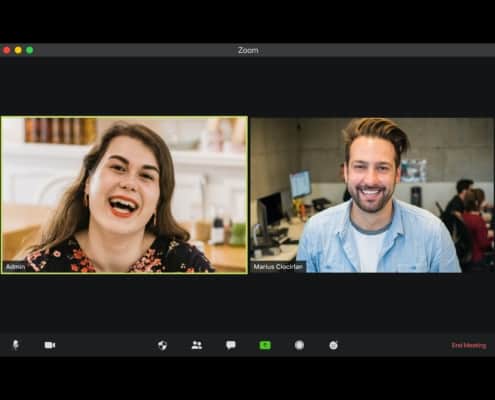
This is the most common type of virtual interview. In this type of interview, both parties access a meeting link at a pre-agreed time and conduct the interview in real-time over a video conferencing platform such as Zoom, Microsoft Teams, Google or Skype.
An Asynchronous Interview
Asynchronous video interviews are another tool that an increasing number of organisations are using to vet candidates. For an asynchronous video, the applicant logs onto a link and is guided through a structured interview process. Their answers are recorded so that the employer can review the video at their convenience.
Before your interview, find and prepare a quiet place where you are unlikely to be disturbed. The right space will ensure a distraction-free interview in which, you, not your environment is the star of the show. Make sure your space has the necessary equipment, a strong internet connection and appropriate décor.
2. Get Your Lighting Right
One of our top video job interview tips is to set up your lighting correctly to ensure that you will be clearly visible throughout the call. When it comes to video calls, the best option is to have natural light positioned in front of you. To do this, place your desk near a window. You can also introduce more light by placing a desk lamp behind your camera. Do not sit directly in front of a window as this will cause you to be backlit and make it difficult for the interviewer to see you.
3. Minimise Disruptions
During the interview, the last thing you need is for someone to walk in on you. To prevent this, let everyone in your home know the time of your interview and where you will be taking the call. You may also want to hang a “Do Not Disturb” sign up on your door.
Parents of young children will want to take special care to lay out the importance of not being disturbed. To be safe, consider preparing an engaging activity or arranging for your children to be out of the house during the time of the call.
For pet owners, the best option is to pet-proof access to your meeting room. Dog-owners may want to consider taking their pup out for a walk beforehand to tire them out (plus, the exercise will also help you feel calmer before the interview). Many cats enjoy plonking themselves down on a nice, warm keyboard and demanding scratches, and of course, this always happens at the worst times. To prevent this, move their bed, food and toys to another room and block off access to the room for the duration of the call.
4. Keep Your Screen at Eye-level
43.1% of employers say that candidates who look directly into the camera make a positive impression. Academic researchfrom Tampere University in Finland found that eye contact during video calls triggers the same kind of psychophysiological responses as eye contact during face-to-face communication.
The best way to ensure eye contact throughout the interview is to elevate your laptop so that the camera is at eye level. A low-tech solution is to prop it up on a few books or a cardboard box. Alternatively, you can invest in an adjustable laptop stand. This will help you sustain eye contact while also promoting better posture, which in turn projects greater confidence.
5. Set Up A Plain Background
When preparing for your interview, don’t forget to prep your space as well. Test your camera to check what parts of the room will be visible behind you. Make sure your backdrop is clean, tidy and clutter-free. You may want to strategically re-arrange any items behind you to give a more professional appearance e.g. perhaps you have professional tools that would look good in the background.
6. Test the Software Beforehand
Another great video job interview tip is to thoroughly test your software before the call. If you are unfamiliar with the video conferencing platform that you will be using for the call, then we highly recommend downloading it in advance and arranging a brief practice session with a friend. During the test session, check the following:
Make sure that you know how to open a meeting
Check how to connect your audio and video hardware
Locate the mute button and the screen share button
Learn how to add a background filter
7. Dress to Impress
You may be tempted into thinking that a video interview is a more casual affair than a face-to-face meeting, however, data from ResumeGo shows that 52% of employers prefer that job candidates wear business casual. Not only does professional attire make a positive impression on the interviewer, but it can also help you to get into interview mode.
Given that you will be appearing on camera, there are a few extra considerations you should bear in mind. Try to stick to simple pieces in solid colours and avoid busy patterns that may distract the eye. If you intend to use a background filter, make sure that your clothes contrast with the background as this will stop you from blending in. Also, don’t neglect your bottom half – just because it’s out of sight doesn’t mean it should be out of mind! You never know if you may be required to stand up at some point during the interview.
8. Switch Off
Switching off all desktop and mobile notifications will help you to focus during the interview.
How to Turn Off Notifications on a Mac Computer:
On your Mac, choose Apple menu > System Preferences, then click Notifications.
In Notifications preferences, select an app on the left, then deselect the Allow Notifications option for the app.
How to Turn Off Notifications on Windows 10:
Open the Settings > System (the first option in the top left) > Notifications & Actions
To stop all alerts, toggle Notifications to off under the line “Get notifications from apps . . .”.
9. Choose A Professional User Name & Profile Picture
If you have used the video conferencing platform before for personal use, then you will need to double-check that your pre-existing username and profile picture are professional. An unprofessional username can make a poor impression and seriously lower your chances of getting the job. As a rule, your username should not be suggestive, flirty, silly or funny. We find it’s best to keep it simple and stick with your first name and surname.
10. Body Language
The famous anthropologist Ray Birdwhistell, claimed that more than 65% of communication is done nonverbally. As such, you need to pay attention to your body language during your video job interview. Ideally, you want your body language to convey engagement, confidence, professionalism and friendliness. Here are some body language tips for video job interviews:
Sit up straight to indicate alertness and engagement. Consider propping yourself up with a small pillow if need be.
Lean in as the interviewer is speaking to express interest.
Nod as your interviewer is speaking to show that you’re actively listening to what they’re saying.
Firmly plant your feet on the floor to help you feel more ‘grounded’.
Keep your hands on the desk to help you resist the urge to fidget.
Smile while you’re speaking. This will make you sound friendlier and lend your voice a more upbeat tone.
Troubleshooting Video Interview Problems: Our Top Tips
If Your Video Or Audio Stops Working
Before the video call, get the phone number of the interview. If you are beset by technical issues during the call, you can leave them a message on the software’s chat function and offer to continue the interview over the phone.
If A Loud Noise Disrupts The Conversation
If a loud noise (e.g. sirens, traffic, lawnmowers, construction, etc.) interrupts the interview, apologise for the interruption and pause for a few moments until the noise dies down. If it is a particularly ear-piercing noise, then you may want to mute the microphone altogether.
If Someone Enters The Room Unexpectedly
If family members, housemates, or pets walk in on your interview, apologise to the interviewer, ask for a few moments, switch off your microphone and camera, and deal with the interruption. Once you are certain that the room is secure, you can rejoin the interview again.
Following Up On Your Video Job Interview
After your interview, take some time to craft a follow-up email. Thank the interviewer for their time in the email body, express how much you enjoyed the call, and offer to follow up on any questions they may have. For more tips on how to write a post-interview thank-you note, read our dedicated guide “How to Write A Job Interview Follow-Up Email”.
Have a remote interview coming up? Download Our Free Interview Guide!
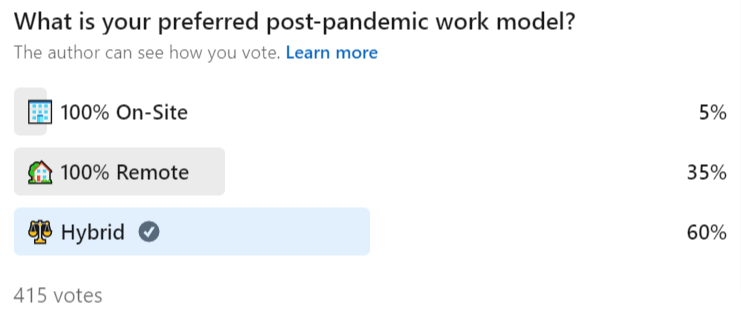
As the jobs market edges closer to pre-pandemic normality, many workers are looking to maintain the flexibility and freedom they gained during the lockdown. As such, our consultants are seeing rising interest in remote jobs. Read this guide to learn more about how to find remote jobs in today’s market.
Data from Eurofound revealed that Ireland had one of the highest home-working rates in Europe at the height of the pandemic with 40% of paid hours worked by employees were performed from home. The National Remote Working Survey found that 94% of Irish workers are in favour of working remotely on an ongoing basis after the pandemic. The top benefits associated with remote working were:
No traffic and no commute
Reduced costs of going to work and commuting
Greater flexibility as to how to manage the working day
Reduced carbon footprint
Greater productivity
Less stressful than working onsite
The Opportunity of Remote Work
In April 2021, there were 55,000 remote jobs open in Ireland. Remote work lifts geographical barriers, meaning that job seekers can hugely expand their career prospects to roles all over Ireland and beyond. As such, ambitious professionals who are planning their next career move no longer have to stay in metropolitan areas with a high cost of living. What’s more, those with dreams of seeing the world can fulfil their wanderlust while also earning a living.
Bonus Content: Our Top 10 Video Job Interview Tips
If you are seeking a new role then you should broaden your search to include remote jobs. This will add an entirely new dimension to your job hunt as there are many new tactics you will need to add to your traditional job-hunting strategy. Fear not, however, Berkley is here to help!
What Skills & Qualities Do Employers Look For in Remote Employees?
If you are applying for a remote role then your application will need to show that you have the right skills and qualities to work productively from home. You will need to tailor your CV to highlight how you have demonstrated relevant skills in the past. So what are the skills and qualities that make for a productive and reliable remote worker?
Previous Remote Experience
It’s a good idea to mention any remote work that you’ve already done. Perhaps you completed an online course from home or you worked from home part-time in a previous role? Employers will be seeking someone who can easily slot into the role, so this experience will give you a competitive advantage over other candidates.
Self-Efficacy
As a remote worker, you will be trusted to complete projects on time with minimal managerial oversight. As such, the independent nature of remote work is highly suited to self-starters. When writing your CV, try to highlight times when you showed autonomy, proactivity and self-motivation.
Organisation
Strong organisation skills go hand-in-hand with self-efficacy. In your application, show how you have used your organisation skills to complete projects on time. Showcase your time management skills and your task prioritisation abilities. You should highlight how your organisational skills have enabled you to multitask or quickly pivot when needed.
Technical Know-How
As a remote employee, you will be highly dependent on technology. Popular tools for remote work include email, instant messaging apps, document-sharing tools and video conferencing software. As such, it’s helpful if you are a tech-savvy individual who can quickly get to grips with new tools.
Communication
What tends to happen when people work remotely is that communication becomes a function of a particular need in time, rather than more social interaction, as would happen in the workplace. It’s these random social interactions that knit together the fabric of company and workplace culture and keeps employees engaged with their company and their colleagues.
Pete RawlinsonWorkVivohttps://www.siliconrepublic.com/advice/working-remotely-communication-workvivo–Silicon Republic
As a remote worker, you will mostly communicate with your colleagues through the written word (i.e. emails, instant messages, productivity tools etc.). As such, it’s vital to be able to relay information and ideas in a clear and concise manner. Be sure to highlight your communication skills in your application. Throughout your application, demonstrate the strength of your communication skills in all your engagements with your potential employer. Be timely in your responses and pay attention to spelling and grammar in your CV, cover letter and all written communications.
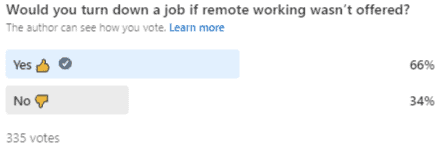
LinkedIn Poll Conducted by Berkley in October 2021
How to Find Remote Jobs: Our Top Tips
Partner with A Recruiter
Remote job hunting is a new challenge for everyone. Engaging with a Recruiter who knows their market well can be worth its weight in gold as they can guide you through processes and give you some strong insight into how a company functions – the finer detail can help you to secure the right role for you.
Louise O’NeillAssociate Director, Business & Technology Team
If you are looking for remote work, we recommend reaching out to a recruitment consultant. They can talk to you about career opportunities in your area and support you with job applications. Your recruiter may also be able to tell you about companies that aren’t openly advertising remote roles but would be open to remote hires.
Choose Your Search Terms Wisely
If you are searching for work through online jobs boards, then pay attention to your search terms. Keywords to look out for include:
Remote
Work at home
Work from home
Home-based
Telecommute
Cyber commute
Use the Remote Job Search Feature on LinkedIn
LinkedIn is another great tool for finding remote jobs. To find suitable remote work opportunities, follow these instructions:
Click the Jobs icon at the top of your LinkedIn homepage.
Click the Search jobs field and enter keywords or a company name.
Click the Search location field and select Remote from the dropdown.
Use the filters options at the top of the search results page to filter the results.
Once you’ve applied all the filters, you can switch on the Job Alert toggle and set job alerts. Learn more about setting job alerts on LinkedIn.
Click the job posting to view the job description and apply for the job if the job suits your requirement.
Security Tips for Remote Job-Hunting
When looking for remote jobs online, safety is paramount. Research from Zapier has revealed that there are approximately 60 “work from home” job scams online for each genuine opportunity. So what can you do to protect yourself online?
To avoid being taken advantage of, we recommend working with a trusted recruitment partner.
If you are searching online, avoid general classified websites such as GumTree.
Always research the company before applying and double-check that the provided email address is legitimate.
If you are looking for a new remote role, then you will need to tailor your job searching strategies accordingly. You may also need to tweak your application to highlight your suitability for a remote job. It’s also important to factor in security as you will not have the opportunity to meet employers face-to-face. If you are new to remote job-hunting, then we recommend chatting to a trusted recruitment consultant.
Start your remote job search today by scheduling a free call with one of our expert recruitment consultants!
https://www.berkley-group.com/wp-content/uploads/2021/06/helena-lopes-RgPQNvoIcdg-unsplash-scaled-e1622714408282.jpg400495Robert Hawkeshttps://www.berkley-group.com/wp-content/uploads/2026/05/Berkley-Group-Logo-2026.svgRobert Hawkes2021-06-03 11:06:322022-04-07 11:55:42How To Find Remote Jobs
Meet Seamie – a Recruitment Resourcer on Berkley’s Permanent Business & Technology team. In this interview, he discusses how Berkley has supported him as he takes the first step on the recruitment career ladder.
Discovering the World of Recruitment
Seamie joined the Berkley team in September 2020 upon graduating from University College Cork (UCC) with a Commerce degree. “When I finished up at college, I wasn’t sure what I wanted to do. However, I spoke to some friends who were working in recruitment and they really sold it to me. I soon secured an interview for a role here at Berkley, and everything fell into place after that.”
So what is it about a career in recruitment that appeals to Seamie? “For me, the social aspect is the biggest plus. I really enjoy interacting with the candidates, clients and my colleagues. Since joining the team here, I have also learned that I really thrive in a target-based environment – the element of competition gives me that extra bit of motivation on a Monday morning.”
A Day in the Life of a Resourcer
As a Resourcer, Seamie’s role is to provide support to his teammates in the Business & Technology Division. “Generally speaking, my role involves going to the market, speaking to suitable candidates, bringing them back to the consultants for review and then they’ll take over the process from there. If the candidate succeeds in getting a job interview, then I’ll also help them with prep.”
Joining the Berkley Training Academy
Since joining in September, Seamie has received extensive training through Berkley’s Training Academy. This includes one-to-one training sessions, shadowing, hands-on experience and plus much more.
“When you’re new to recruitment, it seems like there is a lot to learn. I liked that the training really brought everything back to basics and broke everything down into smaller steps so it doesn’t seem as daunting.”
In just a few short months, Seamie has revealed himself to be a quick learner and has proven to be an excellent team player. So what’s his secret to success? “During my training, I found that the most important thing is that you need to have the right attitude. If you have a strong interest in the processes of recruitment, then the training can be picked up fairly quickly.”
“In particular, I have found that the training I’ve received has really helped me to develop my communication and teamwork skills.”
This Could Be You!
If Seamie’s interview has sparked your interest in recruitment, why not get in touch with us to learn more about career opportunities at Berkley? Join our training programme to build invaluable skills in a friendly and rewarding environment.
https://www.berkley-group.com/wp-content/uploads/2021/05/Seamus_blog.jpg400495Robert Hawkeshttps://www.berkley-group.com/wp-content/uploads/2026/05/Berkley-Group-Logo-2026.svgRobert Hawkes2021-05-21 09:53:132021-06-28 15:00:43Meet the Team: Seamie Hanafin
Do you struggle with promoting yourself to potential employers? Read our guide to learn how to sell yourself in a job interview.
One of the most common pieces of job interview advice given to candidates is to “sell yourself”. In other words, do your best to persuade the interviewer of your worth and the value you could potentially bring to their company. In the interview, you are both the marketer and the product. While self-promotion may come naturally to some, for many of us this is a difficult task. However, it is important to master this skill in order to set yourself up for success in your job interview.
Hard work is the foundation of success—but it’s not enough. When you are job hunting, you cannot rely on the quality of your work to speak for itself. In order to land the opportunities you want, you need to be able to communicate your achievements and make your positive results visible to others. Some may think that self-promotion is merely an exercise in self-aggrandisement, however in reality the aim of self-promotion is to build up confidence in others so they trust you to take on a new challenge.
Self-promotion boils down to what you say and how you say it. The words you speak should be compelling and credible. Your delivery needs to communicate confidence (not arrogance) through both verbal and non-verbal cues. In this guide, we will offer ten practical tips to help you learn how to sell yourself in a job interview setting.
Many candidates find that working with a trusted recruitment partner can help them become more comfortable with selling themselves in a job interview session. Your recruiter can share general interview tips and conduct mock interviews to help build your confidence in the lead-up to an interview. They can also help you to identify your specific selling points for the role in question, so you can effectively make your case to the employer.
How to Sell Yourself in A Job Interview: 10 Tips
Give Yourself Permission
If you’re the kind of person who dislikes talking about yourself, then it’s important to work on becoming more comfortable doing this. This is a vital skill that will prove useful throughout your life. The first thing you need to do is to permit yourself to be positive and to take pride in your achievements. People who are naturally modest may find this difficult, but just remember that it is not prideful or arrogant to simply acknowledge what you’re good at. If you struggle with self-confidence, then it may also be worthwhile to read up on strategies on how to silence your inner critic.
Start with the Job Description
As part of your interview prep, you will need to read and re-read the job interview to gain insights into what the organisation is seeking. When reading the job interview keep one question in mind: “how can I add value?”. Grab a notebook and jot down desirable skills and qualities mentioned in the description that you feel apply to you. For each point, think of a time when you demonstrated this skill or quality. This exercise will help you to develop talking points that are relevant to the company’s needs.
Practice Until It Feels Natural
If you dislike talking about yourself, practice can help a lot. Not only will this enable you to work out the kinks before the interview, but it will also give you a chance to become more comfortable with saying positive things about yourself. If possible, do a mock interview with your recruiter or with a friend. For more tips on how to calm pre-interview jitters, read our dedicated guide “How to Calm Your Nerves Before An Interview.”
“Body language is a very powerful tool. We had body language before we had speech, and apparently, 80% of what you understand in a conversation is read through the body, not the words.” –Deborah Bull, Dancer & Broadcaster
There are many nonverbal cues you can use to project confidence so be sure to consider your eye contact, hand motions, posture, and tone of voice. For example, you can communicate interest in what the interviewer is saying by nodding your head and leaning in slightly.
Positive body language in a job interview
Make eye contact
Smile
Keep your back straight back and your shoulders relaxed
Lean in slightly to indicate interest in what the interviewer is saying
Keep your feet firmly on the ground
Avoid fidgeting
Take Your Time
When you’re nervous, you may feel that your heart starts to race and your breathing becomes quicker. In a stressful interview situation, this may cause you to rush your responses and over-talk. To counteract this, try to answer questions mindfully. Before answering any question, take a quick pause to breathe and consider your answer (taking a sip of water can buy you extra time if needed). Remember, the interviewer will be far more impressed with a careful, considered response than a rushed one.
Back-Up Your Answers With Evidence
In a job interview, it’s a good idea to back up your claims with supporting evidence. This will make you seem more credible and trustworthy. You can use statistics, stories and quotes to do this. The CAR (Context, Action, Result) Method provides a handy framework for answering questions:
Q: Tell me about a time when you helped to turn around your team’s sales performance.
Context: “One of my previous employer’s sales divisions was experiencing decreasing sales – so I was brought in to help reverse the situation. My challenge was to manage the team effectively so they were able to exceed (not just meet) their sales targets.”
Action: “Over a six-month period, I introduced several initiatives within the team, including setting specific and measurable sales targets for each individual within the team; introducing weekly sales meetings for the team and for each individual within the team; and implementing a structured sales training program. I also conducted market research to identify what our main competitors were doing, set up focus groups with major clients to establish key goals, and introduced a new remuneration system that linked sales performance to remuneration packages.”
Result: “We increased sales by 60% and exceeded sales targets by 25% in the first quarter, and continued the upward trajectory throughout the next year.”
Look Good, Feel Good
Research has revealed that people form a first impression of someone within five seconds of meeting them. The way you dress has a major effect on how people first perceive you, so it’s important to get it right. What’s more, dressing the part will help you get into the right mindset before the interview (this is especially the case if you are interviewing remotely from home).
How to Dress For an Interview: Top Tips
Match the formality of the company.
Wear comfortable clothing that you can easily move around in.
Pay attention to the details (e.g. shoes, accessories).
Wash and iron your outfit the day before your interview.
When it comes to accessories, perfume and make-up, go for a “less is more” approach.
Keep it Positive
When it comes to interviews, a positive mindset can be infectious. As the old adage goes, “You catch more flies with honey than vinegar.” So what can you do to signal positivity during a job interview:
Smile.
Show excitement for the role.
Talk about how the role ties in with your passions and interests.
Try to skew your answers in a positive way and avoid bringing up negatives.
Demonstrate a can-do attitude towards learning new tasks and skills.
Ask Questions
Interviews are not intended to be a one-way street. Asking questions allows you to find out more about the role and demonstrate your enthusiasm. It also gives you a chance to subtly show off any research you have done. Well-crafted questions will mark you out as a curious, conscientious and astute candidate. Before leaving the interview, always ask about the next step and use this as an opportunity to reiterate your interest in the role.
Quote Others
Another way to sell yourself in an interview is to use “testimonials” i.e. use the words and recommendations of others. For example, you could cite some positive feedback you received in one of your annual reviews or perhaps a customer gave you a glowing review.
How to Sell Yourself In A Job Interview: Be Your Own Champion
The scientist Maxwell Maltz once said that “The most important sale in life is to sell yourself to yourself.” If you have confidence in yourself and in your abilities, this will shine through to anyone you speak with. So don’t be afraid to own your achievements and to be your own champion.
https://www.berkley-group.com/wp-content/uploads/2021/04/linkedin-sales-solutions-Be5aVKFv9ho-unsplash-scaled-e1619092852208.jpg400495Robert Hawkeshttps://www.berkley-group.com/wp-content/uploads/2026/05/Berkley-Group-Logo-2026.svgRobert Hawkes2021-04-22 13:10:522022-05-30 10:38:34How To Sell Yourself In A Job Interview
We may request cookies to be set on your device. We use cookies to let us know when you visit our websites, how you interact with us, to enrich your user experience, and to customize your relationship with our website.
Click on the different category headings to find out more. You can also change some of your preferences. Note that blocking some types of cookies may impact your experience on our websites and the services we are able to offer.
Essential Website Cookies
These cookies are strictly necessary to provide you with services available through our website and to use some of its features.
Because these cookies are strictly necessary to deliver the website, refuseing them will have impact how our site functions. You always can block or delete cookies by changing your browser settings and force blocking all cookies on this website. But this will always prompt you to accept/refuse cookies when revisiting our site.
We fully respect if you want to refuse cookies but to avoid asking you again and again kindly allow us to store a cookie for that. You are free to opt out any time or opt in for other cookies to get a better experience. If you refuse cookies we will remove all set cookies in our domain.
We provide you with a list of stored cookies on your computer in our domain so you can check what we stored. Due to security reasons we are not able to show or modify cookies from other domains. You can check these in your browser security settings.
Google Analytics Cookies
These cookies collect information that is used either in aggregate form to help us understand how our website is being used or how effective our marketing campaigns are, or to help us customize our website and application for you in order to enhance your experience.
If you do not want that we track your visit to our site you can disable tracking in your browser here:
Other external services
We also use different external services like Google Webfonts, Google Maps, and external Video providers. Since these providers may collect personal data like your IP address we allow you to block them here. Please be aware that this might heavily reduce the functionality and appearance of our site. Changes will take effect once you reload the page.
Google Webfont Settings:
Google Map Settings:
Google reCaptcha Settings:
Vimeo and Youtube video embeds:
Privacy Policy
You can read about our cookies and privacy settings in detail on our Privacy Policy Page.












 Seamie joined the Berkley team in September 2020 upon graduating from University College Cork (UCC) with a Commerce degree. “
