Read our guide to discover how to write an AI-friendly CV that will boost your chances of success when you apply for jobs.
As Artificial Intelligence (AI) recruitment technology continues to become more prevalent, candidates who have an understanding of how this tech works will be at a clear advantage over their peers. In this guide, we will discuss how AI is used in the recruitment process and we will also show you how to write a CV that passes the AI test.
Table of Contents
- The Role of AI in Industry 4.0
- AI: Powering the War for Talent in the Age of Industry 4.0
- Statistics About AI & Recruitment
- How is AI Used in Recruitment?
- AI at Berkley
- The Importance of Keywords
- What Not to Do
- How Should I Format My CV?
- What is the Best File Type to Use?
- What About Your Cover Letter?
- Final Words
The Role of AI in Industry 4.0
As the 21st century settles into its third decade, it is safe to say that Industry 4.0 has firmly taken hold. In fact, a report from Facts and Figures forecasts that the global Industry 4.0 Market will reach $210 billion by 2026, increasing at a compound annual growth rate (CAGR) of 17% from 2019 to 2026.
“Intelligent” technologies are a key characteristic of Industry 4.0. AI works to gather data which is then used to automate decision-making. Quick, accurate, and free from bias; the use of AI greatly streamlines processes and boosts productivity. The application of smart technologies such as AI and Machine Learning (ML) have the power to transform a wide range of diverse industries from blue-collar industries right through to white-collar, information economy, and service jobs.
AI: Powering the War for Talent in the Age of Industry 4.0
As employers’ needs change with the times, so too must the recruitment strategies used to source candidates. This has resulted in the evolution of Recruitment 4.0 – a dynamic, technology-driven approach that makes use of cutting-edge tools and techniques to intelligently source the best candidates.
In recent years, Artificial Intelligence (AI) has emerged as one of the defining technologies of Recruitment 4.0. We are now seeing an increasing number of organisations turning to AI platforms in order to bring their hiring processes into the 2020s. From planning to placing, no stage of the recruitment process has been left untouched by smart technologies.
Statistics About AI & Recruitment
- By 2025, the global AI market is expected to be almost $60 billion. (Source: Hacker Noon)
- 72% of surveyed business leaders believe AI will be the business advantage of the future. (Source: PwC)
- 76% of recruiters believe AI will have a significant impact on the recruitment industry. (Source: LinkedIn)
- Over half of surveyed talent acquisition professionals say that since AI was introduced, candidates today are more qualified, and roles are filled in a more timely way. (Source: Korn Ferry)
- 63% of talent acquisition professionals say AI has changed the way recruiting is done at their company. (Source: Korn Ferry)
How is AI Used in Recruitment?
AI platforms make use of algorithms that can quickly scan a large volume of profiles within a talent pool. This process can be completed in seconds. AI is typically employed to complete the initial skills selection process; aligning profiles with the relevant skillsets to the advertised role.
So what exactly are these algorithms looking for when they scan an application? AI algorithms are programmed to seek out specific keywords, skillsets and phrases around work history, responsibilities, skills and accomplishments. This keyword scanning functionality allows them to quickly and easily identify candidates who best match the job description. Many AI tools boast sophisticated semantic and synonym capabilities and this enables them to align similar language between job descriptions and CVs.
The profiles that are the best match to the job description will then be sent on to the consultant for further review. The input of AI in the selection process automates a typically time-consuming task which frees the consultant up to engage more with the candidate on the role, their career and market insights.
AI at Berkley
Berkley is no exception to this. Our team is embracing cutting-edge AI technology to introduce a whole new level of talent intelligence to the recruitment process. This empowers our consultants to source more relevant candidates with greater speed and accuracy. This also helps to ensure that candidates are only notified about the roles that are the best fit for their skills
The Importance of Keywords
Using keywords is an effective means of tailoring your application so that it aligns with the specifics of the role. In the context of AI, using keywords to highlight the relevance of your skillset will help you to get past the initial round of screening. As such, the keywords you use can make or break your job search.
How to Conduct Keyword Research?
When looking for the most relevant keywords to include in your application, the job description should be your first port of call. Read the job description carefully and note down any key phrases featured in the job overview and candidate specifications. Pay special attention to any words that are repeated.
If you are struggling to identify keywords, paste the description into an online cloud generator (e.g. monkeylearn.com) and see which words appear most often, based on how large they appear within the word cloud.
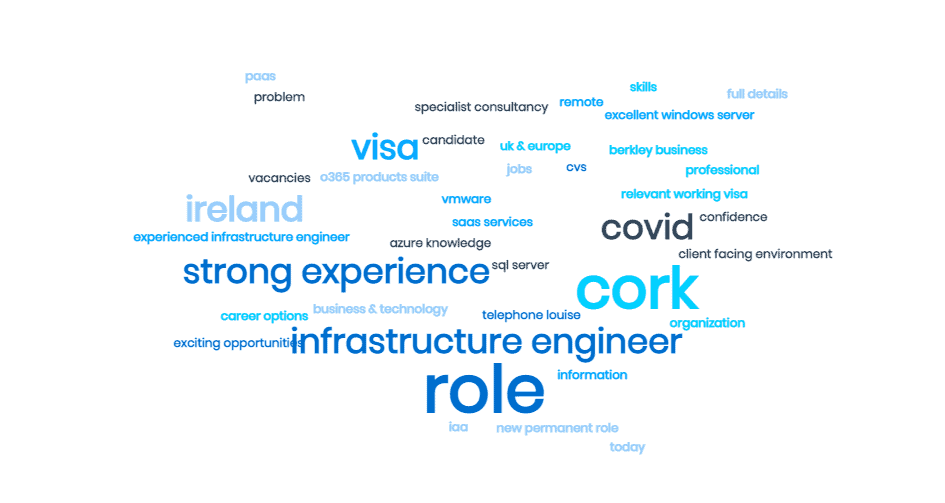
Word Cloud for an Infrastructure Engineer Role advertised on Berkley
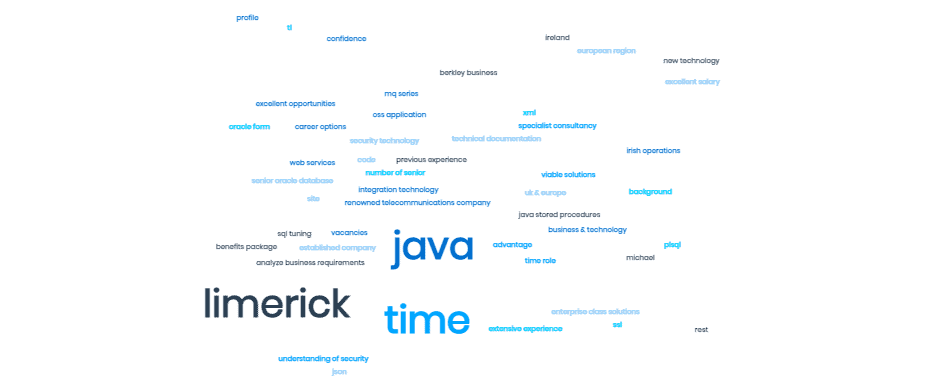
Word Cloud for an Oracle Database Developer Role advertised on Berkley
Keyword scanners use Natural Language Programming and Latent Semantic Indexing in order to recognise synonyms and related language. So once you have identified your primary keywords, you can start brainstorming synonyms and related key phrases. If you are struggling with this, then why not take inspiration from descriptions for similar jobs or by looking at the LinkedIn profiles of people with these roles. You can also ask your recruiter for help.
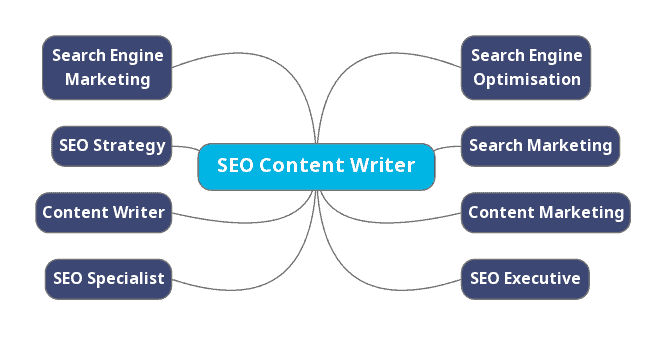
Example of a Mind Map created for an SEO Content Writer position
How to Incorporate Keywords into Your Application?
Now that you have a list of keywords, the next step is to figure out how to incorporate them into your CV. Remember, you’re not just writing your application for a machine. All going well, your application will also be read by a hiring manager so you need to strike a careful balance between hitting the right keyword density while also sounding natural. In other words, avoid keyword stuffing.
Where are the best places to include your keywords?
- Job titles
- Work experience descriptions
- Skills matrix
- List of role achievements
- Education & qualifications section
- Personal statement
- Cover letter
What Not to Do
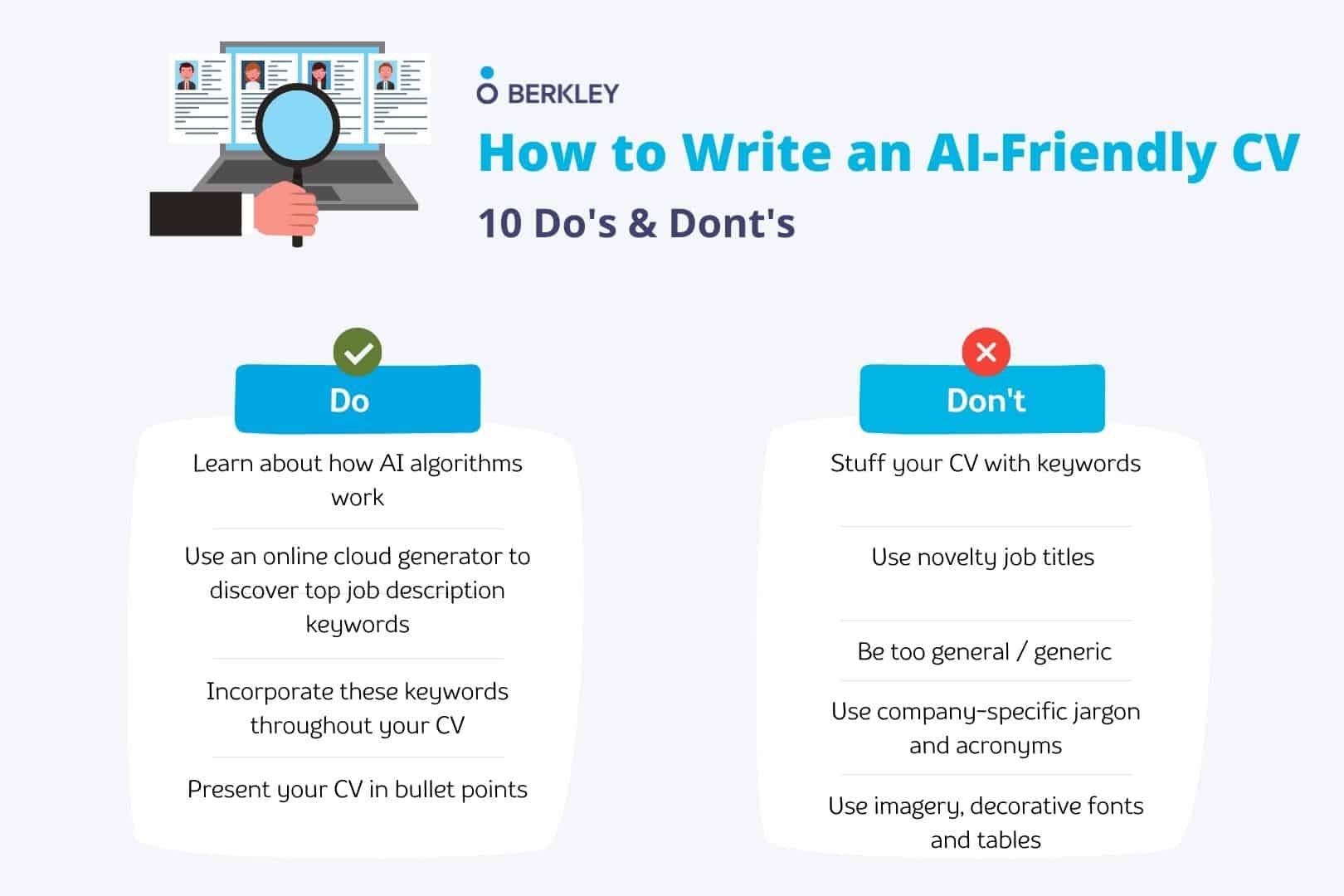
- Avoid using novelty job titles, for example, “Marketing Evangelist”, “Python Master”, “Automation Ninja”. While these titles might sound impressive, the AI scanner won’t read them as relevant keywords. As such, it’s better to stick with a more conventional sounding job title that incorporates your keywords.
- Don’t be generic. These AI systems are designed and built to filter out CVs that don’t match enough of the job description. As such, the more closely you mirror the job description in your application, the better your chances of proceeding to the next stage.
- Avoid company-specific jargon and acronyms. Make sure that any technical terms you use align with industry standards. The first time you use an acronym, be sure to use the full term as well even if it is a very well-known acronym, e.g “From 2006 – 2012, I worked as a Quality Assurance (QA) Manager.”
- As a rule, you should avoid using flowery language. Aim to keep your language simple, clear and to the point.
How Should I Format My CV?
Consider the order in which you present your information very carefully. AI-Powered recruitment platforms tend to favour documents that have a clear hierarchy of information so always try to put the most important information first. For example, in your skills section arrange your list by importance – placing the most relevant keywords at the top of your list and least relevant at the bottom.
Use bullet points throughout to enhance the structure and readability of your CV. This also makes it easier for both machines and humans to quickly scan the document. Another benefit of bullet points is that it makes it easier for you to arrange information in a way that highlights the most important things first.
Avoid using formats and items that machines would find difficult to parse correctly such as imagery, decorative fonts, and tables.
What is the Best File Type to Use?
For a long time, candidates were encouraged to use PDFs to ensure that the recipient could easily view the document in its original formatting. However, it is better to use a text-based application if you are taking an AI-based system into account.
Why? AI-based systems use Optical Character Recognition (OCR) to convert the PDF text into a machine-readable form. However, this technology isn’t always the most reliable. To avoid any readability issues, it’s best to submit a good old fashioned Word document instead.
What About Your Cover Letter?
Don’t forget to include a cover letter as part of your application. While it is unlikely that the AI will process your cover letter, it still provides a valuable opportunity to contextualise your CV and make an argument as to why you would be a good fit. To learn more cover letter tips, read our guide “How to Write a Cover Letter for Your Dream Job.”
Final Words
“Some people call this artificial intelligence, but the reality is this technology will enhance us. So instead of artificial intelligence, I think we’ll augment our intelligence.”
~ Ginni Rometty, Former CEO of IBM
The use of AI adds a lot of value to the recruitment process. However, the human touch is still essential in the world of recruitment. It’s important to remember that AI is only there to provide support for a real person behind the process. For more examples of best-in-class CVs, check out Berkley’s extensive library of free, customisable CV templates?